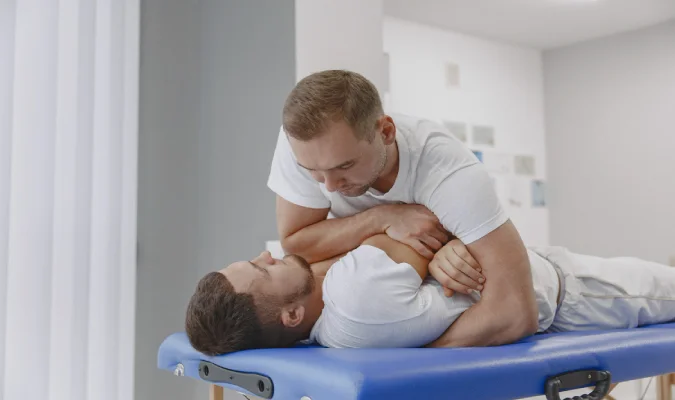


Finding the right Chiropractor in Portland starts with understanding what you need from your care. You may be experiencing recurring lower back pain, stiffness in your neck, or discomfort following an automobile accident. Whatever brings you to the search, the goal should be to find a qualified professional who listens, performs an appropriate evaluation, and recommends treatment based on your individual condition.
Portland has multiple chiropractic clinics, and their services, communication styles, treatment approaches, and office policies may differ. Choosing between them can feel overwhelming, especially if you are already dealing with pain or limitations in your daily activities.
The nearest office is not automatically the best fit. Neither is the practice with the most reviews or the boldest promises.
A thoughtful decision considers professional licensing, clinical experience, safety, treatment options, patient preferences, and the ability to measure meaningful progress.
This guide explains what to look for, which questions to ask, and how to compare your options before scheduling an appointment.
Looking for chiropractic care in East Portland? Call 503-512-7076 to ask about an evaluation at Northwest – Hinojosa Chiropractic.
1. Start by Identifying Your Main Health Concern
Before searching for a provider, consider what problem you want evaluated.
Some people seek care because of a recent episode of lower back pain. Others have recurring neck stiffness, reduced movement, or discomfort after a motor vehicle collision.
These situations can require different assessments and treatment decisions.
For example, uncomplicated lower back pain may be approached with education, suitable exercises, and selected conservative interventions. Neck pain after significant trauma may require medical evaluation before manual treatment is considered.
A good chiropractor should recognize these differences rather than recommending the same procedure for every complaint.
Common reasons people seek chiropractic care
| Health concern | What an evaluation should consider |
|---|---|
| Lower back pain | Duration, movement limitations, neurological symptoms |
| Neck pain | Mobility, headaches, arm symptoms, medical history |
| Pain after an accident | Injury mechanism, prior medical care, warning signs |
| Recurring stiffness | Activities, function, previous treatments |
| Difficulty returning to exercise | Physical capacity and gradual progression |
| Persistent musculoskeletal discomfort | Functional goals and possible contributing factors |
You do not need to diagnose yourself before scheduling. Describing your symptoms and goals is enough to begin a useful conversation.
2. Verify That the Chiropractor Is Licensed in Oregon
Professional licensing is one of the first things to check when choosing a chiropractor.
In Oregon, chiropractic professionals are regulated by the Oregon Board of Chiropractic Examiners.
The board provides a public license lookup that can help consumers verify licensing information and review available disciplinary records.
This is more reliable than assuming someone is licensed because their website describes them as experienced or highly rated.
How to check a license
Visit the Oregon Board of Chiropractic Examiners license verification page.
Use the board’s public search tool and enter the professional’s name.
Review the available information, including current license status.
If you have difficulty finding a record, ask the clinic for the chiropractor’s full professional name or license details.
Licensing is an essential requirement, but it does not guarantee that a particular treatment will work for you.
3. Look for Experience Relevant to Your Symptoms
Experience can be useful when it relates directly to your reason for seeking care.
A chiropractor who regularly evaluates accident-related musculoskeletal complaints may be familiar with the questions, documentation, and referral decisions that arise after a collision.
Someone seeking care for recurring back pain may prioritize a provider who emphasizes exercise, self-management, and functional progress.
However, experience alone does not prove that one clinician is better than another.
The important question is whether the provider can explain how they evaluate and manage conditions like yours.
Questions about clinical experience
Ask whether the chiropractor commonly sees patients with your type of complaint.
Find out how they decide whether chiropractic treatment is appropriate.
If you were injured in a crash, ask how the clinic coordinates with other healthcare professionals when additional medical evaluation is needed.
You can also ask what happens when a patient does not improve as expected.
A trustworthy response should acknowledge that not every condition can be managed through chiropractic treatment.
4. Compare Treatment Approaches Before Making a Decision
Not all chiropractic practices use identical treatment methods.
Some emphasize spinal manipulation. Others incorporate therapeutic exercise, joint mobilization, education, activity recommendations, or rehabilitation-oriented services.
For selected musculoskeletal complaints, an individualized combination of interventions may be appropriate.
The National Center for Complementary and Integrative Health reports that spinal manipulation may provide small improvements in pain and function for some people with lower back pain. However, evidence strength varies, and manipulation is only one of several possible approaches.
Treatment options to discuss
| Treatment option | Potential purpose | Question to ask |
|---|---|---|
| Therapeutic exercise | Improve strength and movement | What can I practice at home? |
| Patient education | Support informed self-management | What should I understand about my symptoms? |
| Joint mobilization | Address selected movement limitations | Why is it appropriate for me? |
| Spinal manipulation | Consider for certain complaints | What are the risks and alternatives? |
| Activity guidance | Support return to normal routines | How should I progress safely? |
| Referral to another provider | Investigate concerns beyond chiropractic care | When would referral be necessary? |
A chiropractor should be able to explain why a particular option is being recommended.
You can learn more about different approaches through our guide to chiropractic services.
5. Make Sure the Clinic Performs a Proper Initial Evaluation
Your first appointment should involve more than a brief conversation followed immediately by treatment.
An appropriate evaluation generally begins with a medical and symptom history.
The chiropractor may ask when your discomfort began, which activities are affected, and whether you have experienced similar symptoms before.
Previous injuries, surgeries, medications, and medical conditions can also influence treatment decisions.
Depending on the complaint, the examination may include movement testing, physical assessment, and neurological screening.
The clinician should explain the findings and discuss whether chiropractic care is appropriate.
What a first visit may include
- Review of your main symptoms and goals.
- Questions about relevant medical history.
- Discussion of previous treatments.
- Assessment of movement and function.
- Screening for concerning findings.
- Explanation of potential treatment options.
- Discussion of risks, alternatives, and expected progress.
- Recommendations for follow-up or referral.
Imaging should not be ordered automatically for every patient. Its necessity depends on the history and clinical findings.
For additional preparation, read our chiropractic appointment guide.
6. Ask How the Chiropractor Measures Improvement
A useful treatment plan should establish goals that matter in your daily life.
Pain intensity is one measurement, but it does not capture the full picture.
For example, you may want to sit comfortably during work, turn your head while driving, walk longer distances, or return to recreational activities.
The chiropractor should ask which activities are most important to you.
Progress can then be reviewed during follow-up appointments.
Examples of functional goals
| Daily activity | Possible goal |
|---|---|
| Working at a desk | Improve sitting tolerance |
| Driving | Turn the neck more comfortably |
| Walking | Gradually increase distance |
| Household chores | Return to suitable bending and lifting |
| Sleeping | Reduce pain-related interruptions |
| Exercise | Resume appropriate physical activity |
A provider should reconsider the plan if your symptoms worsen or you are not making meaningful progress.
Repeated visits without clear goals or reassessment should prompt questions.
7. Understand the Benefits and Limits of Chiropractic Care
A chiropractor may help evaluate and manage certain musculoskeletal conditions, but chiropractic treatment is not a universal solution for pain.
For some people with lower back pain, spinal manipulation may provide modest improvements.
Other patients may benefit more from exercise, education, or different types of healthcare.
Neck pain requires particular attention to medical history and possible contraindications.
The risks and benefits of cervical manipulation should be discussed before any procedure is performed.
The NCCIH information on spinal manipulation explains the available evidence, common temporary side effects, and rare serious complications.
Be cautious about guaranteed results
No responsible provider can promise that every patient will become pain-free after a fixed number of visits.
Recovery depends on the condition, individual health factors, and response to treatment.
A realistic plan should explain what improvement may be possible without guaranteeing an outcome.
8. Consider Your Preferences About Manual Treatment
Some patients are comfortable considering spinal adjustments. Others prefer a treatment plan that emphasizes exercise or does not include high-velocity manipulation.
Both preferences deserve respect.
You should be able to ask what a proposed technique involves, what benefits are expected, and what alternatives exist.
If you have concerns about neck manipulation, discuss them openly.
You should never feel pressured to agree to a procedure before understanding its risks and purpose.
Informed consent is part of appropriate healthcare.
A good provider will consider your preferences when developing a plan, while also explaining when a requested procedure would not be medically appropriate.
9. Know When Medical Care Should Come First
Not every case of back or neck pain is suitable for routine chiropractic treatment.
Certain symptoms require prompt medical evaluation.
Seek emergency care for serious trauma, new bladder or bowel dysfunction, numbness around the groin, or significant progressive neurological weakness.
Sudden severe headache accompanied by difficulty speaking, vision changes, or balance problems also requires emergency attention.
Neck pain after a major collision may need medical assessment before any manual procedure.
A chiropractor should recognize warning signs and recommend appropriate referral.
Choosing a provider who understands these limits is an important part of patient safety.
10. Choose a Chiropractor Who Explains Costs and Insurance Clearly
Healthcare costs can influence your decision, especially when treatment may involve multiple visits.
Before booking, ask about the initial evaluation fee, potential follow-up charges, and any additional services.
If you plan to use health insurance, confirm whether the clinic participates with your insurer and whether your specific benefits apply.
Do not assume that all chiropractic services are covered.
Ask whether any documentation or authorization is required.
Billing questions worth asking
- What does the initial evaluation cost?
- Are follow-up visits billed separately?
- Are exercises or additional procedures charged separately?
- Which insurance plans are accepted?
- Can I receive an estimate before treatment?
- What happens if my insurer denies a claim?
- Are payment options available?
Clear answers can help you avoid unexpected financial obligations.
11. Ask About Oregon PIP After a Car Accident
If your symptoms began after a motor vehicle accident, Oregon Personal Injury Protection insurance may be relevant.
PIP can help cover certain eligible accident-related medical expenses under applicable rules and policy terms.
Some chiropractic services may qualify when medically necessary, but coverage is not automatic.
The clinic may request accident details, a claim number, or medical records.
You should confirm benefits and requirements with your insurer.
A provider’s willingness to explain documentation is useful, but no clinic should guarantee that every bill will be paid.
Read our PIP insurance guide for more information.
Insurance concerns should never delay emergency medical treatment.
12. Evaluate the Clinic’s Approach to Accident Injuries
A car accident can produce several different types of symptoms.
Neck stiffness, lower back pain, headaches, and movement limitations are among the complaints people may report.
However, symptoms after a collision should not automatically be attributed to uncomplicated muscle strain or whiplash.
A proper evaluation considers the mechanism of injury, prior medical assessment, and potential warning signs.
If significant injuries are suspected, medical evaluation takes priority.
For selected non-emergency musculoskeletal complaints, conservative care may include education, appropriate exercises, and manual treatment when suitable.
What to ask after a collision
Ask how the chiropractor evaluates patients with recent trauma.
Find out whether the clinic reviews emergency department reports and coordinates referrals when necessary.
You can also ask whether exercises are part of the rehabilitation approach and how progress is documented.
For further information, visit our guide to car accident chiropractic care.
13. Read Patient Reviews With a Critical Eye
Online reviews can provide useful information about the patient experience.
They may help you understand whether people felt listened to, received clear explanations, or had questions answered.
However, reviews are subjective and may not reflect the experience of every patient.
A high star rating does not establish clinical superiority.
Pay attention to patterns across multiple reviews rather than relying on a single unusually positive or negative comment.
Look for information about communication, scheduling, billing transparency, and professionalism.
Be cautious about testimonials promising permanent cures or results that cannot be independently verified.
14. Consider Location and Accessibility in Portland
Convenience matters when selecting healthcare.
A clinic near your home or workplace may make it easier to attend appointments and follow through with a treatment plan.
If you live in East Portland or near Gresham, a practice in the eastern part of the city may be practical.
However, travel distance should be balanced against the quality of evaluation and communication.
If neck pain prevents you from turning your head safely, arrange another way to travel.
Before visiting, confirm the office address, current hours, and appointment availability.
Some online listings and older website pages may contain outdated scheduling information.
15. Compare Clinics Using a Simple Checklist
Once you have identified a few options, compare them using the same criteria.
This helps keep your decision focused on factors that matter rather than advertising claims.
Chiropractic clinic comparison checklist
| Criterion | What to verify |
|---|---|
| Oregon license | Current professional status |
| Relevant experience | Familiarity with your complaint |
| Initial evaluation | Thorough history and examination |
| Treatment options | Exercise, education, and appropriate manual care |
| Informed consent | Clear discussion of risks and alternatives |
| Functional goals | Specific outcomes and reassessment |
| Insurance transparency | Explanation of coverage and costs |
| Location | Practical travel arrangements |
You do not need a perfect score in every category, but significant gaps in safety, licensing, or communication deserve attention.
16. Questions to Ask Before Scheduling
A short phone conversation can help determine whether a clinic is worth considering.
You might ask how long the first appointment usually takes and whether the chiropractor evaluates patients with your type of symptoms.
You can also ask what happens if a patient needs medical referral.
If you prefer an exercise-based approach, find out whether the clinic incorporates active rehabilitation.
If you were involved in an accident, ask what records are useful and whether the office can explain its PIP billing process.
The goal is to understand the clinic’s approach before committing to treatment.
If you are comparing chiropractic clinics in East Portland, call 503-512-7076 to ask about services, insurance questions, and appointment availability.
17. What Makes a Good Patient–Chiropractor Relationship?
An effective healthcare relationship depends on communication and trust.
You should feel comfortable describing your symptoms accurately and asking questions.
The chiropractor should explain findings in understandable language without using fear-based claims.
For example, being told that your spine is permanently damaged without an adequate clinical basis can create unnecessary anxiety.
A responsible professional should distinguish confirmed findings from possibilities.
You should also be encouraged to participate in decisions about treatment.
If your preferences or goals change, the plan should be discussed again.
18. What If Chiropractic Treatment Is Not Helping?
Not every patient improves with the first treatment approach.
If your symptoms remain unchanged or worsen, it is reasonable to ask for a reassessment.
The chiropractor may need to reconsider the working diagnosis, adjust the treatment plan, or recommend another healthcare professional.
You should not be expected to continue indefinitely without measurable progress.
Some conditions require medical investigation or other types of rehabilitation.
An appropriate referral is a sign of responsible care, not a failure.
19. Chiropractic Care in East Portland
For people seeking a Chiropractor in Portland, East Portland offers a location to consider when comparing practices.
Northwest – Hinojosa Chiropractic is located at 205 NE 181st Ave, Portland, OR 97230.
The clinic’s published team information identifies Dr. Hinojosa and describes experience with accident-related chiropractic care.
Patients can contact the office to ask about evaluations for musculoskeletal complaints, treatment options, and documentation related to motor vehicle accidents.
Current availability, insurance participation, and recommended services should be confirmed directly.
Frequently Asked Questions About Choosing a Chiropractor in Portland
How Do I Choose a Chiropractor in Portland?
Verify Oregon licensing, review relevant experience, ask about evaluation methods, compare treatment options, and confirm costs and insurance details.
How Can I Verify a Chiropractor’s Oregon License?
Use the public license lookup provided by the Oregon Board of Chiropractic Examiners to review available licensing information.
Should I Choose a Chiropractor Based on Online Reviews?
Reviews can help you evaluate patient experiences, but they should not replace licensing checks, clinical questions, or informed decision-making.
Can a Chiropractor Help With Lower Back Pain?
Some patients may experience modest improvements with appropriate conservative care, including exercise, education, and selected manual techniques.
Can I See a Chiropractor for Neck Pain?
A chiropractor can evaluate certain musculoskeletal neck complaints and determine whether conservative care or medical referral is appropriate.
Do All Chiropractors Perform Spinal Adjustments?
Treatment approaches vary. Some plans include exercise, education, or mobilization, and spinal adjustments are not necessary for every patient.
What Should Happen During My First Chiropractic Visit?
Expect a discussion of your symptoms and medical history, an appropriate examination, and an explanation of treatment options, risks, and alternatives.
Should I See a Chiropractor After a Car Accident?
An evaluation may be appropriate for non-emergency musculoskeletal symptoms. Serious trauma or warning signs require medical attention first.
Does Oregon PIP Insurance Cover Chiropractic Treatment?
PIP may cover eligible, medically necessary accident-related services under the applicable policy. Coverage is not guaranteed.
Where Can I Find Chiropractic Care in East Portland?
Northwest – Hinojosa Chiropractic is located at 205 NE 181st Ave, Portland, OR 97230. Call 503-512-7076 to ask about appointments.
Choose Chiropractic Care That Fits Your Needs
Finding the right Chiropractor in Portland is about more than convenience, advertising, or star ratings.
The right choice begins with a licensed professional who understands your concerns, performs an appropriate assessment, explains treatment alternatives, and establishes realistic goals.
Whether you are seeking help for lower back pain, neck discomfort, or symptoms after an automobile accident, you deserve clear information and an individualized approach.
For information about chiropractic evaluations in East Portland, contact:
Northwest – Hinojosa Chiropractic
205 NE 181st Ave, Portland, OR 97230
Phone: 503-512-7076
This article is for general educational purposes and does not replace individualized medical advice. Seek urgent medical care for serious injuries or warning signs. Treatment outcomes, insurance coverage, and appointment availability are not guaranteed.