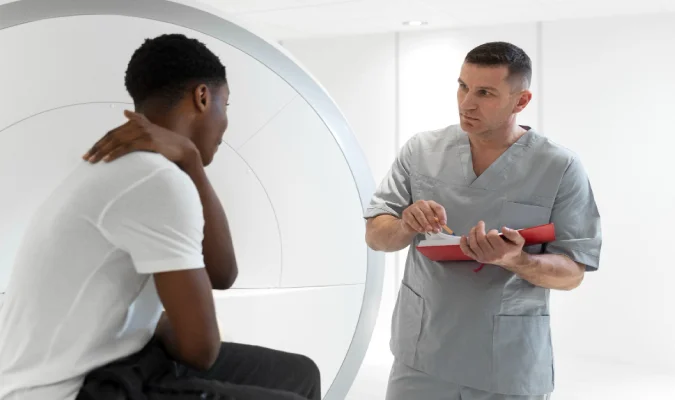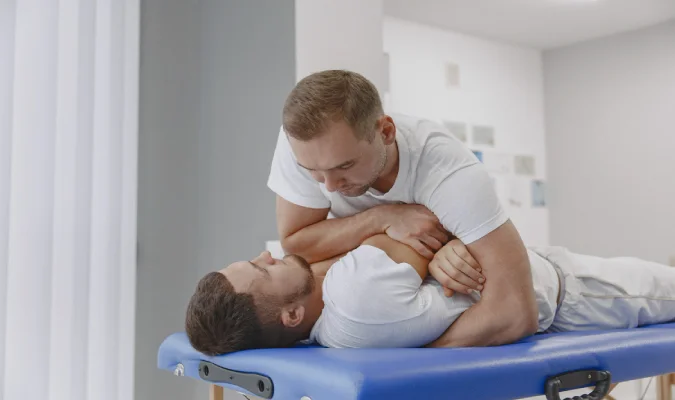


Whiplash Treatment After an Auto Accident begins with understanding what happened during the collision, recognizing potentially serious symptoms, and obtaining an appropriate clinical evaluation. Neck pain or stiffness after a crash may be related to whiplash, but it should not automatically be diagnosed as a simple muscle strain.
Whiplash can occur when the head moves rapidly during a collision, placing stress on structures in the neck. Some people notice discomfort immediately, while others develop symptoms over the following hours or days.
At Northwes – Hinojosa Chiropractic in Portland, Oregon, patients can inquire about musculoskeletal evaluations following automobile accidents. The clinic’s published team includes Dr. Hinojosa and Dr. Kostin, whose professional profiles describe experience with accident-related care.
Call 503-512-7076 to ask about an evaluation at 205 NE 181st Ave, Portland, OR 97230.
If you have severe symptoms or signs of a serious injury, seek urgent medical attention rather than waiting for a routine chiropractic appointment.
What Is Whiplash After a Car Accident?
Whiplash describes a neck injury associated with a rapid acceleration and deceleration movement of the head. Rear-end collisions are a familiar cause, but other impacts and sudden movements can also produce similar symptoms.
The term whiplash-associated disorder is sometimes used to describe the symptoms and functional limitations that may follow this type of injury.
Not every neck injury after a collision is whiplash. A medical evaluation may be needed to rule out fractures, neurological injury, concussion, or other conditions.
How a Collision Can Affect the Neck
| Factor | What May Happen | Why Evaluation Matters |
|---|---|---|
| Sudden head movement | Neck tissues experience rapid loading | Symptoms may have several causes |
| Muscle response | Soreness or guarding may develop | Pain does not identify the exact injury |
| Joint irritation | Movement may become uncomfortable | Treatment suitability varies |
| Associated headache | Pain may involve the head and upper neck | Other causes must be considered |
| Neurological symptoms | Tingling, weakness, or sensory changes may occur | Medical assessment may be necessary |
The type of impact alone does not establish the severity of the injury.
Common Whiplash Symptoms After an Auto Accident
Symptoms may begin shortly after a collision or become more noticeable over the next day or two.
Common complaints include neck pain, stiffness, headaches, and difficulty turning the head. Some people also report discomfort across the shoulders or upper back.
Symptoms and Recommended Next Steps
| Symptom | How It May Appear | Appropriate Response |
|---|---|---|
| Neck pain | Soreness or aching | Arrange clinical assessment |
| Neck stiffness | Reduced comfortable movement | Describe limitations |
| Headache | Pain after the collision | Report severity and associated symptoms |
| Shoulder discomfort | Upper back or shoulder pain | Include in the evaluation |
| Dizziness | Feeling unsteady | Seek medical assessment, particularly after head injury |
| Tingling | Altered sensation in an arm or hand | Obtain medical evaluation |
| Weakness | Reduced strength or control | Seek urgent medical care if new or worsening |
Symptoms alone cannot reliably distinguish a mild soft-tissue injury from a more serious condition.
When Whiplash Symptoms Require Emergency Care
Do not assume that every symptom after a collision is suitable for chiropractic treatment.
Serious neck or head injuries require prompt medical assessment, especially after a high-impact crash.
Warning Signs to Take Seriously
- Loss of consciousness or significant confusion.
- Severe neck pain after substantial trauma.
- New or worsening weakness in an arm or leg.
- Difficulty walking or maintaining balance.
- Severe headache accompanied by neurological changes.
- New problems with bladder or bowel control.
- Numbness around the groin or genital area.
- Sudden vision, speech, or coordination problems.
Choosing the Right Level of Care
| Situation | Recommended Action |
|---|---|
| Serious collision with suspected neck injury | Emergency medical evaluation |
| Progressive weakness or neurological changes | Urgent or emergency care |
| Severe headache with confusion | Emergency assessment |
| Mild neck stiffness without warning signs | Arrange appropriate clinical evaluation |
| Persistent symptoms affecting daily activities | Follow up with a healthcare professional |
| Symptoms that worsen during treatment | Stop and request reevaluation |
For further guidance, see NHS inform’s information on whiplash symptoms and medical assessment.
What to Do During the First Days After a Collision
After immediate medical concerns have been addressed, the next steps depend on the findings of your evaluation.
For uncomplicated whiplash, clinical guidance generally favors remaining gently active, avoiding prolonged immobilization, and returning to normal activities as tolerated.
These recommendations do not apply automatically when a serious injury has not yet been excluded.
Practical Steps After Medical Clearance
- Understand your diagnosis. Ask what the evaluation found and whether further assessment is necessary.
- Stay gently active. Follow professional guidance about comfortable movement.
- Avoid prolonged bed rest. Extended inactivity is generally not recommended for uncomplicated whiplash.
- Discuss symptom management. Ask about appropriate medication or other measures.
- Track functional changes. Note improvements or difficulties with daily activities.
- Reassess worsening symptoms. New neurological signs require medical attention.
- Keep relevant records. Save medical reports and information about the accident.
What to Avoid
- Forcing painful neck movements.
- Attempting forceful self-manipulation after a recent collision.
- Returning to unsafe activities before being assessed.
- Wearing a neck collar for prolonged periods unless specifically advised.
- Assuming that a normal-looking vehicle means no injury occurred.
- Ignoring persistent or worsening symptoms.
How Whiplash Is Evaluated
A proper evaluation starts with the history of the accident and the patient’s symptoms.
The clinician should consider whether a medical referral or diagnostic imaging is needed before recommending manual treatment.
Typical Assessment Components
| Assessment | Purpose | Important Consideration |
|---|---|---|
| Accident history | Understand the mechanism and timing | Does not diagnose the injury alone |
| Medical history | Identify prior conditions and risks | May affect treatment decisions |
| Symptom review | Document pain and functional limitations | Includes neurological complaints |
| Movement assessment | Examine comfortable neck motion | Should not force movement |
| Neurological screening | Look for changes in strength or sensation | Abnormal findings may require referral |
| Imaging decision | Determine whether imaging is indicated | Not every patient needs X-rays or MRI |
| Care discussion | Explain options, benefits, and risks | Requires informed consent |
Are X-Rays or MRI Always Necessary?
No. Imaging is not automatically required for every case of uncomplicated whiplash.
A clinician may recommend imaging or medical referral based on the injury mechanism, examination findings, neurological symptoms, and established clinical decision rules.
Imaging should answer a specific clinical question rather than be used routinely for every patient.
If your neck symptoms began after a collision, review the clinic’s car accident chiropractic evaluation services in Portland.
Call 503-512-7076 to ask what information to bring to an accident-related evaluation.
What Are the Main Whiplash Treatment Options?
Treatment should be individualized to the patient’s condition and any medical findings.
For uncomplicated whiplash, the strongest general recommendations emphasize education, appropriate activity, and exercises tailored to the person’s symptoms and abilities.
Manual interventions may sometimes be considered, but the evidence for their specific benefit in whiplash is more limited than for active approaches.
Comparing Treatment Options
| Option | Potential Role | Important Limitation |
|---|---|---|
| Patient education | Explain symptoms and safe activity | Does not replace diagnosis |
| Gentle movement | Support comfortable neck mobility | Must respect injury precautions |
| Therapeutic exercise | Improve function and activity tolerance | Should be individualized |
| Pain management | Make daily movement more manageable | Medication decisions need appropriate guidance |
| Physical therapy | Provide structured rehabilitation | May be useful when symptoms persist |
| Manual therapy | May be considered in selected cases | Evidence for whiplash is limited |
| Spinal manipulation | May be considered only after safety assessment | Not appropriate for every post-trauma patient |
| Medical referral | Investigate serious or persistent symptoms | May be the priority before manual care |
Why Exercise and Movement Matter
Gradual movement can help people resume normal activities and avoid unnecessary restriction.
A clinician may recommend comfortable range-of-motion exercises, strengthening, or a progressive return to daily tasks, depending on the diagnosis.
Read more about therapeutic exercise and functional rehabilitation options.
The Princess Alexandra Hospital NHS Trust whiplash guide also explains the role of activity, gentle exercise, symptom management, and follow-up.
Can Chiropractic Care Help After Whiplash?
Chiropractic care may be one component of a conservative management plan for selected patients with musculoskeletal symptoms, provided serious injury has been excluded and the proposed interventions are appropriate.
However, chiropractic adjustments are not a required treatment for whiplash, and they should not be presented as a guaranteed way to speed recovery.
The decision should consider clinical findings, patient preferences, potential risks, and alternative options.
Questions to Ask Before Manual Treatment
- What findings support the diagnosis?
- Have serious injuries been ruled out?
- Is manipulation appropriate after my accident?
- What risks are associated with the proposed technique?
- Could exercise or another approach be considered instead?
- How will we measure improvement?
- When would you recommend a medical referral?
Special Precautions for the Cervical Spine
After recent trauma, forceful neck manipulation may be inappropriate if fracture, instability, vascular injury, neurological problems, or other contraindications are suspected.
The clinician should screen for these concerns and explain the proposed procedure before treatment.
For a separate discussion of manual techniques, see how chiropractic adjustments may be considered for whiplash symptoms.
How Long Does Whiplash Recovery Take?
Recovery time varies.
Many people improve over several weeks, while others experience symptoms for months or need additional assessment and rehabilitation.
No clinic can reliably promise a specific recovery date for every patient.
Factors That May Affect Recovery
| Factor | Why It Matters |
|---|---|
| Severity of symptoms | Greater initial limitations may affect daily function |
| Other injuries | Additional conditions may complicate recovery |
| Previous neck problems | Medical history may influence management |
| Sleep and stress | Can affect symptom experience |
| Activity tolerance | Helps guide a gradual return to normal tasks |
| Neurological symptoms | May require additional medical evaluation |
| Response to care | Determines whether the plan needs adjustment |
Signs That Follow-Up Is Important
- Symptoms are worsening rather than improving.
- Neck pain continues to significantly restrict work or daily activities.
- New headaches, dizziness, or neurological symptoms appear.
- You cannot comfortably perform necessary driving movements.
- You are unsure whether an exercise or treatment is appropriate.
- Progress has stalled and the care plan has not been reassessed.
The goal is not simply to complete a predetermined number of appointments. Follow-up should reflect clinical needs and functional progress.
Driving, Work, and Daily Activities After Whiplash
Returning to routine activities can be an important part of recovery after uncomplicated whiplash.
However, safety comes first.
Do not drive if neck movement, pain, dizziness, or medication affects your ability to check traffic or react appropriately.
Everyday Activity Considerations
| Activity | Practical Consideration |
|---|---|
| Driving | Ensure you can safely check mirrors and blind spots |
| Desk work | Change positions and take movement breaks |
| Lifting | Resume gradually according to symptoms and advice |
| Exercise | Begin with appropriate, tolerable activity |
| Sleep | Find a comfortable position and supportive setup |
| Sports | Return progressively when safe |
| Physically demanding work | Discuss restrictions when necessary |
You do not always need to be completely symptom-free before resuming ordinary activities, but your plan should be guided by safety and your clinical circumstances.
Whiplash Documentation After an Oregon Auto Accident
Medical records can be useful for continuity of care and for administrative processes after a collision.
Accurate documentation should describe actual symptoms, examination findings, clinical decisions, and changes over time.
Documentation does not guarantee that an insurer will approve a claim.
Documents Worth Keeping
- Date and general description of the accident.
- Emergency department or urgent care records.
- Imaging reports, if available.
- Medication information.
- Notes about symptoms and functional limitations.
- Appointment and treatment records.
- Insurance correspondence.
- Claim number, if assigned.
Clinical and Insurance Documents
| Document | Possible Use | Important Reminder |
|---|---|---|
| Initial assessment | Records symptoms and findings | Must be clinically accurate |
| Follow-up notes | Tracks changes | Does not prove a guaranteed outcome |
| Imaging report | Provides findings when imaging is indicated | Not required in every case |
| Exercise recommendations | Explains home management | Must be individualized |
| Insurance information | Supports claim administration | Does not establish coverage |
| Billing records | Documents services and charges | Subject to policy terms |
Does Oregon PIP Insurance Cover Whiplash Care?
Oregon Personal Injury Protection insurance may provide benefits for eligible medical expenses related to automobile accidents, depending on the policy and applicable rules.
The availability of PIP benefits does not mean that every chiropractic procedure or visit will automatically be covered.
It is reasonable to ask the clinic what information is needed and to confirm coverage details with your insurer.
For additional guidance, read our article about PIP Insurance after an auto accident in Oregon.
Insurance Questions to Prepare
- What PIP benefits apply to my policy?
- Do I have a claim number?
- Which services are eligible?
- Is authorization required?
- What documents must be submitted?
- Are there expenses I may need to pay?
- How can I review billing statements?
Call 503-512-7076 to ask what insurance and accident documents to bring to your evaluation.
Meet Dr. Hinojosa and Dr. Kostin in Portland
Northwes – Hinojosa Chiropractic presents Dr. Hinojosa and Dr. Kostin as members of its chiropractic team.
Their published profiles describe professional experience with automobile accident cases and chiropractic care.
Dr. Hinojosa
The clinic’s profile describes Dr. Hinojosa’s experience with accident-related injuries, including whiplash concerns. It also identifies English and Spanish as languages he speaks.
Dr. Kostin
The clinic describes Dr. Kostin as having experience with personal injury chiropractic care and automobile accident cases. His profile also mentions multilingual communication.
You can review the clinic’s published chiropractor profiles.
Patients should verify professional licensing independently and ask which clinician is available for their appointment.
Why Consider Northwes – Hinojosa Chiropractic for an Evaluation?
If you are researching Whiplash Treatment After an Auto Accident in Portland, a useful next step is to ask how the clinic evaluates post-collision symptoms and determines whether conservative treatment is appropriate.
Northwes – Hinojosa Chiropractic provides information about chiropractic services related to automobile accidents and has published professional profiles for Dr. Hinojosa and Dr. Kostin.
The clinic is located at:
Northwes – Hinojosa Chiropractic
205 NE 181st Ave
Portland, OR 97230
Phone 503-512-7076
Call to inquire about an evaluation, available appointment times, and what documentation you should bring.
Frequently Asked Questions About Whiplash After a Car Accident
What Is Whiplash After an Auto Accident?
Whiplash is a neck injury associated with rapid head movement during a collision or similar event. An appropriate evaluation is important because other injuries may cause similar symptoms.
Can Whiplash Symptoms Appear a Day or Two Later?
Yes. Neck pain and stiffness may become noticeable hours or days after a collision. Delayed symptoms do not rule out the need for medical evaluation.
Do I Need an X-Ray or MRI for Whiplash?
Not always. Imaging depends on the injury, symptoms, examination findings, and clinical indications.
What Is the Recommended First Step for Whiplash Treatment?
The first step is an appropriate evaluation to identify serious injuries and determine safe management. For uncomplicated whiplash, guidance commonly supports gentle activity and appropriate exercises.
Can Chiropractic Adjustments Treat Whiplash?
Manual treatment may be considered for selected patients after safety screening, but adjustments are not required for everyone and the evidence for their specific benefit in whiplash is limited.
Is Neck Manipulation Safe Immediately After a Car Accident?
It should not be assumed safe without an appropriate assessment. Recent trauma and suspected serious injuries may make cervical manipulation inappropriate.
How Long Does Whiplash Usually Take to Improve?
Many people improve within weeks, while others need several months or additional care. Recovery time varies by individual.
Should I Wear a Neck Collar After Whiplash?
Routine prolonged collar use is generally not recommended for uncomplicated whiplash. Follow medical instructions if a collar is prescribed for a specific reason.
Can Oregon PIP Insurance Help Pay for Whiplash Care?
PIP may cover eligible accident-related medical expenses, depending on the policy and applicable requirements. Coverage is not guaranteed.
Can I Request an Appointment With Dr. Hinojosa or Dr. Kostin?
Yes. Contact Northwes – Hinojosa Chiropractic at 503-512-7076 to ask about appointment availability and the professionals who are currently scheduling patients.
Request a Post-Accident Neck Evaluation in Portland
If you are looking for Whiplash Treatment After an Auto Accident, begin with an appropriate clinical evaluation rather than assuming that every neck symptom requires an adjustment.
At Northwes – Hinojosa Chiropractic, you can inquire about an evaluation related to a car accident and ask about availability with Dr. Hinojosa or Dr. Kostin.
Northwes – Hinojosa Chiropractic
205 NE 181st Ave
Portland, OR 97230
Call 503-512-7076 to request information about an appointment.
This article is for educational purposes and does not replace individualized medical assessment. Severe trauma, progressive neurological symptoms, or other emergency warning signs require urgent medical care. Treatment outcomes and insurance coverage cannot be guaranteed.