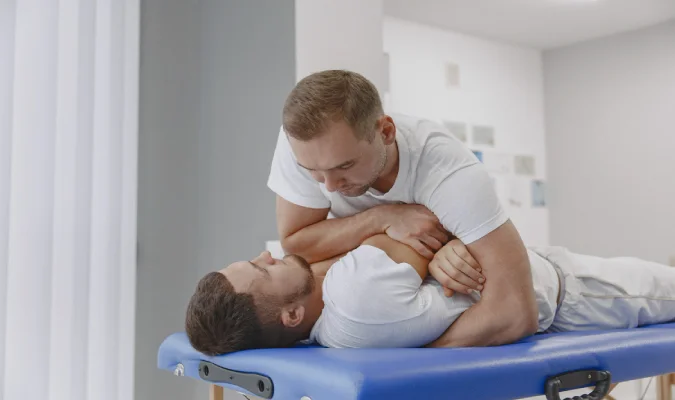


Chiropractic Adjustments for Whiplash are often discussed by people experiencing neck pain, stiffness, and limited movement after a motor vehicle collision. However, an adjustment is not automatically the right treatment for every whiplash injury. The first priority is determining what happened to the neck, identifying any serious injuries, and choosing an appropriate recovery plan.
Whiplash can affect your ability to drive, work, sleep, and perform everyday activities. Some symptoms begin immediately after a crash, while others develop hours later. Although many people recover over time, symptoms can persist and interfere with daily life.
Chiropractic care may be one component of conservative management for selected patients. Depending on the examination, treatment may involve education, therapeutic exercises, gentle joint mobilization, or other manual techniques. High-velocity cervical manipulation requires particular caution and is not necessary for everyone.
This guide explains the potential role of chiropractic adjustments, their limitations, the importance of exercise, and the safety questions to discuss before treatment.
If you are looking for accident-related chiropractic care in East Portland, Northwest – Hinojosa Chiropractic can provide information about evaluations and available services.
Call 503-512-7076 to ask about an appointment for neck or back symptoms after a car accident.
Understanding Whiplash After a Motor Vehicle Collision
Whiplash describes a neck injury associated with a sudden acceleration and deceleration movement of the head. It is commonly linked to rear-end collisions, but other types of accidents can also produce similar forces.
The movement can affect muscles, ligaments, joints, and other cervical structures. The severity of the symptoms does not always correspond directly to the apparent damage to the vehicle.
A person may develop neck discomfort even after a collision that initially seemed minor. However, the absence of severe symptoms immediately after a crash does not rule out every important injury.
Common symptoms of whiplash
| Symptom | Possible effect on daily activities |
|---|---|
| Neck pain | Difficulty turning or tilting the head |
| Cervical stiffness | Reduced comfort while driving |
| Headaches | Trouble concentrating or working |
| Shoulder discomfort | Pain with reaching or lifting |
| Muscle tenderness | Discomfort during movement |
| Reduced range of motion | Difficulty checking blind spots |
| Arm tingling or weakness | Possible need for neurological evaluation |
Symptoms such as progressive weakness, significant neurological changes, or severe pain after major trauma require medical attention rather than routine manual treatment.
Why an Evaluation Comes Before Chiropractic Adjustments for Whiplash
The most important part of early whiplash care is not selecting a manipulation technique. It is determining whether conservative treatment is appropriate.
An evaluation may include questions about the collision, your medical history, previous neck injuries, current symptoms, and activities that have become difficult.
The clinician may examine neck movement, muscle function, sensation, strength, and other findings when indicated.
If a serious injury is suspected, medical evaluation and possibly imaging should occur before cervical manipulation is considered.
Information your clinician may need
Be prepared to explain when the collision happened, the direction of impact, whether you struck your head, and whether you received emergency care.
Mention symptoms that appeared later, even if they seemed unrelated at first.
Tell the clinician about dizziness, unusual headaches, visual changes, numbness, or weakness.
Also provide information about previous surgery, fractures, osteoporosis, medications, and other relevant medical conditions.
A complete history helps the clinician decide which procedures to avoid as well as which treatments might be useful.
What Are Chiropractic Adjustments?
A chiropractic adjustment is a manual procedure intended to influence movement in a joint.
Some adjustments involve a quick, controlled thrust. Other forms of manual care use slower movements and are generally described as mobilization.
These techniques are not interchangeable, and their risks and indications may differ.
For someone with neck pain after a collision, the decision to consider a manual technique depends on the examination findings and the stage of recovery.
An audible popping sound is not evidence that a joint has been corrected or that an injury has healed.
A useful outcome is improvement in symptoms or meaningful activities over time.
Can Chiropractic Adjustments Help Whiplash Recovery?
Research supports multimodal care for selected patients with whiplash-associated disorders. This means combining appropriate interventions rather than relying on one procedure.
Some clinical guidelines include manual therapy within a broader plan involving exercise, education, and activity advice.
However, recommendations are not uniform. The evidence for particular manipulation techniques in whiplash is limited, and high-velocity cervical manipulation is not an essential component of recovery.
For patients who may benefit from manual care, the clinician should explain why a specific technique is being considered and how its effect will be evaluated.
Potential goals of appropriate manual care
A carefully selected intervention may aim to address movement restrictions, reduce discomfort, or help a patient participate more comfortably in an active rehabilitation program.
These are possible treatment goals, not guaranteed results.
Manual therapy should not be described as repairing torn tissues, reversing all crash-related damage, or preventing chronic pain with certainty.
If the patient does not experience meaningful improvement, the approach should be reassessed.
The Difference Between Cervical Manipulation and Mobilization
Patients sometimes hear the terms adjustment, manipulation, and mobilization used as though they mean the same thing.
Understanding the distinction helps you make an informed decision.
| Approach | General description | Important consideration |
|---|---|---|
| High-velocity manipulation | A rapid, controlled thrust to a joint | Requires careful screening and informed consent |
| Joint mobilization | Slower, controlled joint movements | May be considered for selected movement restrictions |
| Soft-tissue techniques | Manual work involving muscles and related tissues | Evidence and benefits vary |
| Therapeutic exercise | Active movement and strengthening | Important component of many recovery plans |
| Patient education | Advice about symptoms and safe activity | Helps support independent recovery |
A patient can receive conservative whiplash care without undergoing a high-velocity neck adjustment.
In particular, someone with a recent traumatic injury should not assume that cervical manipulation is appropriate before significant injuries have been excluded.
Why Therapeutic Exercise Matters After Whiplash
Appropriate movement and exercise are central to many evidence-based whiplash recovery programs.
After an accident, it is understandable to avoid turning your head because movement feels uncomfortable. However, prolonged inactivity may contribute to stiffness and reduced confidence in movement.
For uncomplicated injuries, clinicians commonly encourage a gradual return to appropriate activities.
Exercises may focus on comfortable range of motion, muscle control, endurance, and progressive strengthening.
The exact program depends on your symptoms and any medical restrictions.
Examples of rehabilitation goals
A person who has difficulty turning the head while driving may work on restoring comfortable cervical rotation.
Someone who struggles with computer work may focus on activity tolerance and muscle endurance.
A patient whose neck symptoms interfere with exercise may need a gradual progression back to physical activity.
These goals should be individualized rather than based on a standard routine for every patient.
Read more about the possible role of therapeutic exercise in conservative care.
When Chiropractic Adjustments for Whiplash May Not Be Appropriate
There are situations in which cervical manipulation should not be performed.
A suspected fracture, cervical instability, certain neurological findings, or other significant medical concerns may make manual procedures inappropriate.
Recent trauma requires particular care because symptoms can overlap with those of more serious injuries.
High-velocity cervical manipulation has also been associated with rare but potentially serious complications, including vascular injury. The relationship between manipulation and cervical artery dissection is complex, and clinicians should not dismiss relevant warning signs.
A qualified provider should discuss risks, alternatives, and uncertainty rather than presenting the procedure as completely risk-free.
Questions about safety
Before agreeing to a cervical adjustment, ask what the examination found and why the procedure is recommended.
Find out whether gentler mobilization, exercise, or another option might be appropriate.
Ask which symptoms would lead the clinician to avoid manipulation or recommend medical referral.
You have the right to decline a proposed procedure.
What Does a Multimodal Whiplash Recovery Plan Include?
A multimodal plan combines interventions selected for the patient’s needs.
The emphasis may change as symptoms improve.
Early care often focuses on assessment, reassurance, symptom management, and appropriate movement.
Later stages may involve building endurance, restoring strength, and returning to more demanding activities.
Manual techniques, when appropriate, should support these goals rather than replace them.
Possible components of care
| Component | Role in recovery |
|---|---|
| Clinical assessment | Identify injuries and relevant risks |
| Education | Explain recovery expectations and warning signs |
| Neck exercises | Improve mobility and muscle function |
| Gradual activity | Support return to everyday tasks |
| Selected manual care | Address certain symptoms or movement restrictions |
| Progress monitoring | Determine whether the plan is working |
| Medical referral | Investigate concerning or persistent findings |
The combination and timing of these options should reflect individual clinical findings.
What Do Clinical Guidelines Say About Whiplash Treatment?
Clinical guidelines generally emphasize reassurance, staying appropriately active, and neck-specific exercise.
A published guideline on neck pain and whiplash-associated disorders supports multimodal care, which may include manual therapy, self-management advice, and exercise.
However, other whiplash guidance advises caution with manual therapy because evidence of additional benefit is limited.
Recommendations may also differ between recent injuries and symptoms that have persisted for months.
The practical conclusion is that an adjustment should never be presented as a universally required treatment.
For further reading, consult the clinical guideline on neck pain and whiplash-associated disorders and the NHS guidance on whiplash.
The evidence supports discussing a range of options and selecting care based on the individual patient.
How Long Does Whiplash Recovery Usually Take?
Many people with whiplash improve over the following weeks or months, but recovery varies.
The NHS notes that whiplash commonly improves within two to three months, although some people experience symptoms for longer.
The severity of the injury, associated conditions, previous symptoms, and individual circumstances can influence recovery.
A clinician should not promise that a certain number of adjustments will produce complete recovery.
Instead, the plan should include reassessment and measurable goals.
Signs that functional recovery may be progressing
Progress can include turning your head more comfortably, completing work tasks with fewer interruptions, sleeping better, or gradually returning to exercise.
Pain scores can be useful, but they should be considered alongside daily function.
If symptoms persist or worsen, additional evaluation may be appropriate.
A temporary change in discomfort after a session does not necessarily predict long-term recovery.
What Happens During a Chiropractic Evaluation After a Crash?
The first appointment should focus on understanding your injury.
The chiropractor may ask how the crash occurred, when your symptoms began, and what medical care you have already received.
The examination may include cervical movement, relevant orthopedic tests, and neurological screening.
You should have an opportunity to ask questions before agreeing to any procedure.
Not everyone needs an adjustment during the first visit.
Depending on the findings, the clinician may recommend exercises, another conservative option, or a medical referral.
You can learn more about chiropractic care after a car accident and the evaluation process.
Can Whiplash Affect the Upper Back and Shoulders?
Whiplash symptoms are not always limited to the neck.
Some people experience discomfort around the shoulders, upper back, or between the shoulder blades.
This may affect reaching, lifting, desk work, and other daily tasks.
However, pain outside the neck should not automatically be attributed to whiplash.
The clinician needs to consider other injuries and possible causes.
A treatment plan may include exercises for the neck and shoulder region when appropriate.
The goal is to improve overall function rather than focus on a single spinal joint.
How Can You Support Recovery Between Appointments?
The activities you perform outside the clinic can be important.
Follow the exercise recommendations provided for your condition and respect any medical restrictions.
Try to maintain appropriate daily movement rather than keeping your neck completely still for prolonged periods.
Change positions during long periods of desk work if doing so improves comfort.
Avoid attempting forceful neck adjustments on yourself.
Do not push through severe pain, new weakness, or significant neurological symptoms.
If you are uncertain about a particular activity, ask the clinician who evaluated you.
When Should You Seek Urgent Medical Attention?
Serious symptoms after a collision require prompt medical assessment.
Seek emergency care after significant trauma or if you develop new weakness, severe neurological changes, confusion, difficulty speaking, sudden severe headache, or problems with balance.
New loss of bladder or bowel control and other significant neurological symptoms also warrant emergency evaluation.
Severe neck pain after a high-energy crash may require medical assessment before manual treatment.
If you cannot safely turn your head, avoid driving until you have received appropriate advice.
A chiropractic appointment should never delay necessary emergency care.
Can Oregon PIP Insurance Help Pay for Whiplash Care?
Oregon Personal Injury Protection insurance, commonly called PIP, may help cover eligible medical expenses after an automobile accident.
Some chiropractic services may qualify when they are related to the accident and meet the applicable medical necessity and policy requirements.
Coverage is not automatic, and not every service is guaranteed to be paid.
Before assuming that a treatment is covered, confirm your benefits with your insurer.
Ask what documentation is needed and whether the clinic requires a claim number.
For more information, review our PIP insurance guide.
Call 503-512-7076 to ask what information the office requests for accident-related appointments.
How Many Chiropractic Visits Are Needed for Whiplash?
There is no fixed number of visits appropriate for every whiplash injury.
The recommendation depends on your symptoms, examination findings, functional limitations, and response to treatment.
Some patients may need mainly education and a home exercise program.
Others may benefit from supervised rehabilitation and periodic reassessment.
If manual care is included, its continued use should depend on whether it provides meaningful benefit.
A treatment plan should be adjusted if your condition changes or if expected progress does not occur.
You should not feel obligated to purchase an extensive series of adjustments before receiving an individualized evaluation.
How to Evaluate Progress After a Whiplash Injury
Recovery should be measured by more than whether the neck feels different immediately after an appointment.
The clinician can ask about your ability to perform activities that were difficult after the collision.
These changes help determine whether treatment is producing a meaningful benefit.
Functional recovery indicators
| Daily activity | Possible improvement |
|---|---|
| Driving | Turning the head with greater comfort |
| Working | Completing tasks with fewer limitations |
| Sleeping | Fewer interruptions caused by neck discomfort |
| Walking | Better tolerance of daily movement |
| Exercising | Gradual return to appropriate activity |
| Household tasks | Improved ability to reach, carry, or move |
If progress is limited, the clinician should review the plan and consider whether additional medical assessment is needed.
Choosing Whiplash Care in Portland
When comparing providers, ask how they evaluate patients after motor vehicle accidents.
A responsible clinic should discuss the risks and limitations of manual therapy, provide appropriate alternatives, and explain how progress will be monitored.
Look for a treatment approach that includes patient participation and does not rely entirely on passive procedures.
You can also ask about experience with accident-related documentation and insurance questions.
For related information, visit our page about whiplash treatment in Portland.
Whiplash Evaluations in East Portland
Patients looking for accident-related chiropractic care can contact Northwest – Hinojosa Chiropractic at 205 NE 181st Ave, Portland, OR 97230.
You can ask about evaluation appointments, available treatment approaches, and the information needed after an automobile collision.
A treatment recommendation should follow an appropriate clinical assessment.
No particular adjustment, recovery timeline, or insurance benefit can be guaranteed in advance.
Frequently Asked Questions About Chiropractic Adjustments for Whiplash
Are Chiropractic Adjustments for Whiplash Always Necessary?
No. Whiplash care may involve education, exercises, mobilization, and other approaches. Cervical adjustments are not necessary for every patient.
Can Chiropractic Adjustments Help With Whiplash Pain?
Selected patients may benefit from appropriate manual therapy as part of a broader recovery plan, but results vary and evidence for specific techniques is limited.
Is Cervical Manipulation Safe Immediately After a Car Accident?
Not automatically. Significant injuries and contraindications must be considered before any cervical manipulation is performed.
What Is the Difference Between an Adjustment and Mobilization?
An adjustment may involve a rapid thrust, while mobilization generally uses slower controlled joint movements. Their indications and risks can differ.
Do Whiplash Patients Need Neck Exercises?
Appropriate neck exercises are commonly recommended for uncomplicated whiplash to support mobility, strength, and functional recovery.
How Long Does It Take to Recover From Whiplash?
Many people improve within weeks or months, but some experience longer-lasting symptoms. Recovery varies by injury and individual circumstances.
Can I Receive Whiplash Care Without a Neck Adjustment?
Yes. Conservative treatment may include education, therapeutic exercises, activity guidance, and other appropriate interventions.
When Should I Seek Emergency Care After a Collision?
Seek urgent medical attention for significant trauma, progressive weakness, severe neurological symptoms, sudden severe headache, or other concerning changes.
Does Oregon PIP Insurance Cover Chiropractic Whiplash Treatment?
PIP may cover eligible accident-related chiropractic services under applicable rules and policy terms. Coverage is not guaranteed.
Where Can I Ask About Whiplash Care in East Portland?
You can call 503-512-7076 to ask about evaluations at 205 NE 181st Ave, Portland, OR 97230.
Explore Chiropractic Adjustments for Whiplash With an Individual Evaluation
Chiropractic Adjustments for Whiplash should be considered within the context of a complete examination and a recovery plan that prioritizes safety, movement, and functional improvement.
For some patients, selected manual techniques may complement exercises and education. For others, different approaches or medical evaluation may be more appropriate.
If you are experiencing neck or back symptoms after a car accident, ask about an individualized evaluation before deciding on treatment.
Northwest – Hinojosa Chiropractic
205 NE 181st Ave, Portland, OR 97230
Phone 503-512-7076
This article is educational and does not replace individualized medical advice. Seek urgent medical care for serious injuries or warning signs. Treatment results, insurance coverage, and appointment availability are not guaranteed.