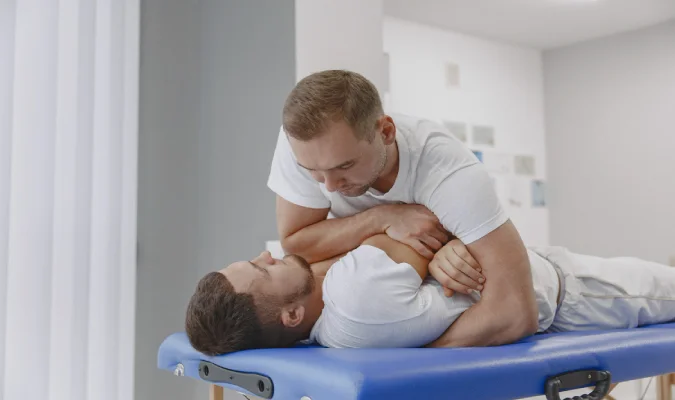


Understanding whiplash and its effects on the neck can help you make informed decisions after a car accident. A collision may leave you with stiffness, headaches, muscle discomfort, or difficulty turning your head. Sometimes these symptoms appear immediately, while in other cases they develop hours or days after the incident.
Whiplash is a neck injury associated with a sudden movement of the head. It is frequently linked to motor vehicle collisions, although falls and sports injuries can also cause it.
Many people improve with time and appropriate conservative care. Others experience symptoms that interfere with driving, working, sleeping, or participating in everyday activities.
Chiropractic care may be one option for selected musculoskeletal complaints after an appropriate evaluation. However, not every whiplash injury requires an adjustment, and some symptoms need medical assessment before manual treatment can be considered.
At Northwest – Hinojosa Chiropractic in East Portland, patients can ask about evaluations for neck and back symptoms following motor vehicle accidents.
Call 503-512-7076 to ask about accident-related evaluations and appointment availability.
What Is Whiplash and How Does It Happen?
Whiplash occurs when the head moves suddenly relative to the body, placing forces on the cervical region.
The movement may happen during a rear-end collision, a side impact, or another abrupt event. It can affect muscles, ligaments, joints, and other tissues around the neck.
The term describes a mechanism of injury rather than identifying one specific damaged structure.
This distinction matters because two people involved in similar collisions may develop different symptoms and need different evaluations.
Vehicle damage alone cannot reliably establish the severity of a person’s injury.
Likewise, the fact that someone walked away from an accident does not automatically rule out a clinically important problem.
Common situations associated with whiplash
A rear-end collision is a familiar example, but whiplash-type injuries may also occur during sports, falls, and other incidents involving sudden head movement.
The direction of the force, the person’s position, previous health conditions, and associated injuries may all be relevant to the clinical history.
After significant trauma, medical assessment should take priority over routine chiropractic procedures.
Whiplash and the Symptoms You Should Recognize
Neck pain and stiffness are among the most common symptoms.
Some people also experience headaches, shoulder discomfort, muscle spasms, or reduced neck mobility.
Other symptoms can include dizziness, fatigue, and difficulties with concentration.
Not all symptoms are necessarily caused by uncomplicated whiplash, so new or unusual complaints should be discussed with a healthcare professional.
Common symptoms and their possible effects
| Symptom | How it may affect daily life |
|---|---|
| Neck pain | Discomfort during head movements |
| Neck stiffness | Difficulty checking blind spots |
| Headaches | Reduced concentration at work |
| Shoulder discomfort | Problems with reaching or lifting |
| Upper back soreness | Difficulty maintaining certain positions |
| Muscle tenderness | Discomfort during routine activities |
| Dizziness | Possible limitations with balance or driving |
| Arm tingling or weakness | Potential need for urgent neurological assessment |
Arm weakness, significant neurological changes, and other serious symptoms should never be assumed to be routine effects of a minor neck strain.
Why Whiplash Symptoms Can Appear Later
One confusing aspect of whiplash and related neck injuries is that symptoms may not appear immediately.
A person might feel relatively comfortable at the accident scene but notice stiffness later that evening or the following morning.
This delay does not necessarily mean the injury is severe.
However, it also does not establish that the injury is harmless.
The NHS notes that symptoms can take several hours to develop after a neck injury.
If symptoms appear or change after a collision, document what you notice and seek appropriate medical advice.
Do not ignore worsening pain, neurological changes, or other warning signs simply because you initially felt well.
Understanding Whiplash-Associated Disorders
Healthcare professionals sometimes use the term whiplash-associated disorders, or WAD, to describe symptoms and clinical findings following a whiplash mechanism.
The term can encompass neck complaints with varying degrees of physical findings.
Some patients primarily report pain and stiffness.
Others have more pronounced movement restrictions or neurological symptoms.
A clinical evaluation helps distinguish uncomplicated musculoskeletal symptoms from findings that require additional investigation.
You do not need to determine your own classification before seeking care.
The important step is accurately describing the accident, symptoms, and changes in daily function.
What to Do During the First Days After a Collision
The first priority is identifying injuries that need emergency or urgent medical care.
After a significant collision, follow the advice of emergency responders and medical professionals.
If serious injury has been excluded and your clinician considers your symptoms uncomplicated, gentle movement and an appropriate return to normal activities may be encouraged.
Prolonged neck immobilization is generally not recommended for routine whiplash recovery unless a healthcare professional identifies a specific reason.
Pain-relief options may also be discussed with a physician or pharmacist.
Practical early recovery priorities
| Priority | Appropriate action |
|---|---|
| Safety | Seek medical evaluation for concerning symptoms |
| Symptom awareness | Record new or changing complaints |
| Activity | Continue suitable daily movements when cleared |
| Driving | Avoid driving if neck movement is unsafe |
| Exercise | Follow individualized movement recommendations |
| Medication | Ask a qualified professional about appropriate options |
| Follow-up | Reassess symptoms that persist or worsen |
Trying to forcefully stretch or manipulate an injured neck on your own is not advisable.
How Is Whiplash Diagnosed?
Whiplash is generally evaluated through a medical history and physical examination.
A clinician may ask how the collision occurred, when symptoms began, and whether you experienced head trauma or other injuries.
The assessment may include neck movement, tenderness, strength, sensation, reflexes, and other tests when appropriate.
Imaging is not required for every patient.
However, certain traumatic mechanisms, neurological findings, or other concerning features may warrant radiographs, CT, MRI, or specialist assessment.
A qualified clinician should explain why a test is or is not needed.
The evaluation should also consider conditions unrelated to whiplash that could explain the symptoms.
Whiplash and Chiropractic Care After an Accident
When discussing whiplash and chiropractic care, it is important to separate the evaluation from the treatment.
A chiropractor may assess certain musculoskeletal symptoms and discuss conservative management options.
Depending on the findings, those options may include education, therapeutic exercise, activity recommendations, gentle mobilization, or selected manual procedures.
A high-velocity neck adjustment is not an automatic or essential part of care.
In fact, recent trauma and certain symptoms can make cervical manipulation inappropriate until more serious injuries have been excluded.
A responsible treatment recommendation should follow an appropriate clinical assessment and informed consent.
For more information about the services available after a collision, see our guide to car accident chiropractic care.
The Role of Education in Whiplash Recovery
One useful part of conservative care is helping patients understand what to expect.
Pain after an accident can create uncertainty about movement, exercise, work, and driving.
A clinician can explain which activities are appropriate, how to modify demanding tasks, and what symptoms should prompt reassessment.
Education may also help patients avoid unnecessary prolonged inactivity.
The goal is not to tell every person to ignore pain.
Instead, it is to support safe activity within the limits of the individual’s condition.
Patients should have the opportunity to ask questions and participate in decisions.
Why Neck Exercises May Be Important
For uncomplicated whiplash, appropriate movement and exercise are often central parts of recovery.
A program may include comfortable neck movements, gradual strengthening, and exercises to improve muscle endurance.
The exact activities should reflect the person’s symptoms, stage of recovery, and medical restrictions.
Exercises should not be treated as a competition to move farther or tolerate more pain.
If an exercise causes substantial worsening, new weakness, or unusual neurological symptoms, stop and seek appropriate advice.
Possible rehabilitation goals
A patient who has difficulty turning the head while driving may focus on comfortable rotation.
Someone who experiences symptoms during computer work may work toward improving activity tolerance.
Another person may need to gradually return to recreational exercise.
The aim is meaningful functional improvement rather than simply completing a prescribed number of repetitions.
You can explore our information about therapeutic exercise.
Can Manual Therapy Help With Whiplash?
Some clinicians include manual therapy within a broader conservative treatment plan for selected patients.
Manual therapy may involve soft-tissue techniques, gentle joint mobilization, or other procedures.
The evidence for particular techniques in whiplash varies, and manual therapy should not replace appropriate exercise, education, or necessary medical care.
The decision should account for the injury history, examination findings, patient preferences, and possible risks.
No manual procedure can be guaranteed to heal a whiplash injury or prevent persistent symptoms.
A clinician should explain how any proposed intervention will contribute to the patient’s functional goals.
Are Chiropractic Neck Adjustments Necessary?
No.
Whiplash recovery does not require every patient to undergo high-velocity cervical manipulation.
Some people may receive an exercise-based program without any spinal adjustment.
Others may discuss selected manual techniques when a clinician determines that they are appropriate.
Cervical manipulation carries potential risks, including rare serious complications, and deserves careful screening and informed consent.
The National Center for Complementary and Integrative Health explains the potential adverse effects and uncertainties associated with spinal manipulation.
You should feel comfortable asking about alternatives or declining a procedure.
How Long Does Whiplash Recovery Take?
Many people improve within a few weeks to a few months.
The NHS reports that whiplash usually gets better within approximately two to three months, although some patients experience symptoms for longer.
Recovery time varies according to the individual and the nature of the injury.
The severity of initial symptoms, associated injuries, prior health conditions, and other factors may affect the course of recovery.
It is not possible to guarantee that a particular number of appointments will lead to complete recovery.
A realistic care plan should focus on monitoring symptoms and meaningful changes in daily function.
Whiplash and Persistent Neck Pain
Some people continue to experience pain, stiffness, headaches, or activity limitations after the initial recovery period.
Persistent symptoms do not necessarily indicate permanent structural damage.
However, ongoing pain deserves appropriate reassessment.
A clinician may review the original diagnosis, current examination findings, activity limitations, and treatments already attempted.
Further medical evaluation or a different rehabilitation approach may be appropriate.
Continuing the same treatment indefinitely without measurable progress is not a reasonable substitute for reassessment.
If you have persistent symptoms, discuss how your plan can be adjusted.
How to Measure Progress During Recovery
Improvement is not always reflected by a single pain score.
You may notice that turning your head becomes easier, that work is less uncomfortable, or that you can gradually return to activities you had avoided.
These functional changes can help guide treatment decisions.
Functional goals during whiplash rehabilitation
| Activity | Possible measure of progress |
|---|---|
| Driving | Safer and more comfortable head rotation |
| Computer work | Improved tolerance of desk tasks |
| Sleeping | Fewer pain-related interruptions |
| Walking | Greater comfort with daily activity |
| Household tasks | Improved ability to reach and carry |
| Exercise | Gradual return to appropriate training |
Progress may fluctuate, and occasional discomfort does not always mean recovery has stopped.
However, worsening symptoms or a lack of meaningful improvement should prompt a review of the plan.
Returning to Work After Whiplash
Work demands vary considerably.
An office employee may struggle with long periods of sitting or turning toward a monitor.
Someone whose job involves driving may need sufficient neck movement to check traffic safely.
A person who performs physical labor may have difficulty lifting or carrying.
An individualized plan may include temporary activity modifications and a gradual return to usual tasks.
Not every patient needs to stop working.
The decision should consider symptom severity, job requirements, and any medical restrictions.
If you cannot perform essential tasks safely, discuss your situation with an appropriate healthcare professional.
Driving Safely With Neck Pain
Driving requires the ability to turn your head, check mirrors, monitor blind spots, and react quickly.
Neck stiffness can interfere with these movements.
Dizziness, visual symptoms, or medications that impair alertness can create additional safety concerns.
Do not drive if you cannot control the vehicle safely.
Arrange transportation to appointments when needed.
As symptoms improve, your clinician may help you evaluate whether you can resume driving safely.
The goal is not simply to tolerate the pain but to perform the necessary movements without compromising safety.
Whiplash and Headaches
Headaches can occur after a whiplash-type injury.
They may be associated with neck discomfort, but not every headache after an accident is caused by musculoskeletal strain.
Head trauma, concussion, and other medical problems may also need consideration.
A sudden severe headache, especially when accompanied by neurological changes, requires emergency assessment.
Persistent or worsening headaches should be discussed with a healthcare professional.
Treatment decisions should follow an evaluation of the possible causes.
A neck adjustment should not be assumed to be the correct treatment for every post-accident headache.
When to Seek Urgent Medical Attention
Certain symptoms after a collision can indicate injuries that require prompt medical care.
Seek emergency assistance for loss of consciousness, severe confusion, sudden neurological deficits, significant weakness, or a sudden severe headache.
Severe neck pain after major trauma may also require urgent evaluation.
Problems with walking, coordination, vision, or speech should not be ignored.
New loss of bladder or bowel control and significant neurological symptoms also warrant emergency assessment.
A chiropractic appointment is not a substitute for emergency medical evaluation.
When in doubt about serious symptoms, prioritize medical safety.
How Oregon PIP Insurance May Apply
Personal Injury Protection, commonly called PIP, may help pay eligible medical expenses after a motor vehicle accident in Oregon.
The Oregon Division of Financial Regulation explains that PIP generally covers reasonable and necessary accident-related medical expenses incurred within two years, up to $15,000 or the applicable policy limit.
Coverage depends on the specific circumstances, eligibility, and policy requirements.
Not every chiropractic procedure is automatically covered.
Patients should confirm benefits with their insurance company and ask the clinic what documentation is required.
For more details, visit our PIP insurance guide.
Call 503-512-7076 to ask which accident and insurance details to prepare before your appointment.
Preparing for a Whiplash Evaluation
Before your appointment, gather any relevant medical records and accident information.
You may want to note when the collision occurred, what symptoms appeared, and whether you received emergency or urgent medical care.
Bring a list of medications and any relevant imaging reports that are already available.
If you have an insurance claim number, keep it accessible.
You should also write down questions about your symptoms, treatment options, and expected follow-up.
What to bring to your appointment
| Information | Why it may help |
|---|---|
| Accident date | Establish the injury timeline |
| Description of the collision | Explain the mechanism of injury |
| Medical reports | Review previous findings |
| Current medication list | Identify potential precautions |
| Symptom timeline | Understand changes over time |
| Functional limitations | Establish recovery goals |
| Insurance information | Discuss possible billing requirements |
Not every patient will need every document.
Contact the office if you are unsure what to prepare.
Questions to Ask Before Starting Treatment
An informed patient should understand the proposed plan.
Ask what the clinician found during the evaluation and whether additional medical assessment is needed.
Find out which treatments are being recommended and why.
If manual therapy is suggested, discuss its risks and alternatives.
Ask whether exercises will be included and how progress will be measured.
You can also request an explanation of anticipated costs and insurance procedures.
Be cautious about guaranteed recovery claims or a large number of visits prescribed before an individualized evaluation.
Choosing Whiplash Care in Portland
When comparing healthcare options, look for a provider who takes the injury history seriously and recognizes the limits of conservative treatment.
The evaluation should consider possible serious injuries, not simply assume that all post-collision neck pain is uncomplicated whiplash.
Treatment should be explained clearly and adapted to your goals.
A clinic should be willing to discuss exercise, self-management, manual treatment alternatives, and medical referrals.
You can also review our information about whiplash treatment in Portland.
Whiplash Evaluations in East Portland
For patients seeking information about whiplash and chiropractic care near East Portland, Northwest – Hinojosa Chiropractic is located at 205 NE 181st Ave, Portland, OR 97230.
The office can provide information about chiropractic evaluations, accident-related documentation, and appointment inquiries.
The appropriate treatment depends on an individual clinical assessment.
Patients with serious injuries or warning signs should seek medical care before considering routine chiropractic treatment.
Frequently Asked Questions About Whiplash and Chiropractic Care
What Is Whiplash and How Does It Happen?
Whiplash is a neck injury associated with sudden head movement. It commonly occurs during motor vehicle collisions but can also follow falls or sports injuries.
Can Whiplash Symptoms Start a Day After an Accident?
Yes. Neck pain, stiffness, and other symptoms may appear hours or days after the injury.
Can Chiropractic Care Help With Whiplash?
Selected patients may benefit from conservative care that includes education, exercise, and appropriate manual techniques after an individualized evaluation.
Do I Need a Neck Adjustment to Recover From Whiplash?
No. Cervical adjustments are not required for every patient. Exercise, education, and other conservative options may be appropriate.
How Long Does Whiplash Usually Last?
Many people improve within two to three months, but recovery varies and some symptoms may last longer.
Is It Safe to Exercise With Whiplash?
Appropriate gentle movement and exercise are commonly encouraged for uncomplicated whiplash, but activities should follow clinical advice and any medical restrictions.
Should I Wear a Neck Brace After Whiplash?
Neck collars are generally not recommended for routine uncomplicated whiplash unless a healthcare professional identifies a specific reason.
When Should I Seek Emergency Care for Whiplash Symptoms?
Seek emergency care for major trauma, severe neurological changes, significant weakness, sudden severe headache, or other serious warning signs.
Can Oregon PIP Insurance Cover Whiplash Treatment?
PIP may cover reasonable and necessary accident-related medical expenses within applicable policy limits and requirements. Coverage is not guaranteed.
Where Can I Ask About Whiplash Care in East Portland?
You can call 503-512-7076 to ask about evaluations at 205 NE 181st Ave, Portland, OR 97230.
Understanding Whiplash and Your Recovery Options in Portland
Understanding whiplash and the range of available treatment options can help you make more informed decisions after a collision.
For uncomplicated injuries, recovery may involve appropriate movement, education, exercise, and selected conservative interventions.
Chiropractic care may play a role for certain patients, but it should never replace necessary medical evaluation or be presented as a guaranteed cure.
If you have neck pain, stiffness, or related symptoms after an accident, ask about an individualized assessment and the options that may be appropriate for your condition.
Northwest – Hinojosa Chiropractic
205 NE 181st Ave, Portland, OR 97230
Phone 503-512-7076
This article is intended for general education and does not replace individualized medical advice. Seek urgent medical attention for serious injuries or warning signs. Treatment outcomes, insurance coverage, and appointment availability are not guaranteed.