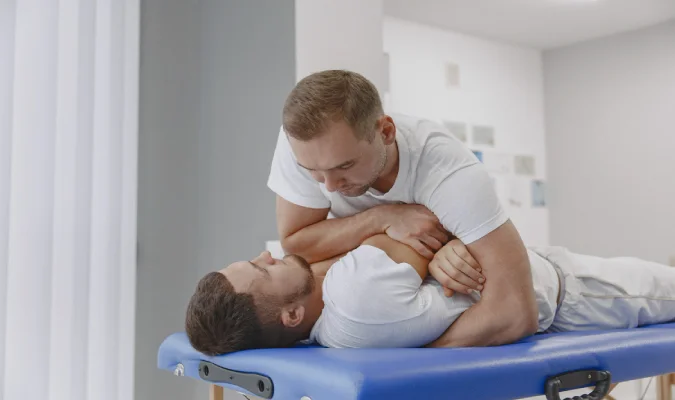


An Adjustment for Neck Pain may be one option when stiffness, limited movement, or recurring neck discomfort begins interfering with your daily routine. Whether the symptoms developed after long hours at a desk, an uncomfortable night of sleep, or a car accident, the first step is understanding what may be causing them.
Neck pain can make simple activities surprisingly difficult. Looking over your shoulder while driving, working at a computer, carrying groceries, or getting comfortable at night may become frustrating. When discomfort persists, it is natural to wonder whether chiropractic care could help.
The answer depends on your symptoms, health history, examination findings, and treatment preferences. A chiropractic adjustment is not necessary for every patient, and there are several conservative approaches to consider.
At Northwest – Hinojosa Chiropractic in Portland, Oregon, patients can inquire about evaluations for selected neck and back complaints, including symptoms that develop after automobile accidents.
Want to discuss your neck discomfort with a chiropractor? Call 503-512-7076 to ask about an evaluation and available appointments.
What Is an Adjustment for Neck Pain?
An Adjustment for Neck Pain is a chiropractic manual procedure intended to address selected joint-related symptoms or movement restrictions. Depending on the clinical assessment, the practitioner may consider a controlled spinal manipulation or recommend a different technique.
Not all chiropractic procedures involve the same movements or force. Some techniques use a quick, controlled impulse, while mobilization involves slower, more gradual movements.
An adjustment should not be described as putting every misaligned vertebra back into place. Neck pain is complex, and many people experience symptoms without a vertebra being physically displaced.
The decision to perform an adjustment should follow a careful assessment and a discussion of possible benefits, risks, and alternatives.
Adjustment versus mobilization
| Technique | General description | What patients should know |
|---|---|---|
| Cervical manipulation | A controlled manual impulse applied to a selected joint | Requires specific screening and informed consent |
| Cervical mobilization | Slower movements within an appropriate range | May be considered as an alternative |
| Soft-tissue techniques | Manual work directed at selected muscles and surrounding tissues | Can complement active care |
| Therapeutic exercise | Individually selected movement and strengthening activities | Often an important part of recovery |
No single technique is automatically the best choice for every person.
Why Does Neck Pain Happen?
Neck discomfort can develop for several reasons. Some cases are associated with muscles and joints, while others involve nerves, injuries, or medical conditions requiring additional investigation.
A clinician should not assume the cause based only on where the pain is felt.
Common situations associated with neck discomfort
Prolonged desk work. Remaining in one position for extended periods can contribute to discomfort. Taking breaks and varying your position may help.
Sleeping in an uncomfortable position. Some people wake up with temporary stiffness or restricted movement.
Physical activity. Exercise, lifting, or an unfamiliar activity can sometimes be followed by muscle soreness.
Recurring musculoskeletal pain. Symptoms may return over time, especially when everyday activities remain difficult.
Nerve-related symptoms. Pain that travels into the arm, particularly with numbness or weakness, deserves a more detailed evaluation.
Automobile accidents. A sudden impact can cause neck symptoms, including those associated with whiplash. Significant trauma requires appropriate medical assessment before manual treatment.
The cause matters because an Adjustment for Neck Pain may be reasonable for some musculoskeletal complaints but inappropriate for others.
Can Chiropractic Adjustments Actually Help Neck Pain?
Clinical practice guidelines support considering manual therapy for certain patients with nonspecific neck pain. However, the strongest approach often combines appropriate manual care with exercise, patient education, and continued activity.
An adjustment may provide short-term improvement in discomfort or movement for some patients. The size and duration of benefits vary.
There is no reliable basis for promising that one adjustment will eliminate chronic pain, permanently correct posture, or prevent future neck problems.
A useful treatment plan should answer three questions:
- What condition or symptoms are being addressed?
- What meaningful improvement should the patient expect to work toward?
- How will progress be assessed?
The goal is not simply to make a joint produce a popping sound. It is to improve the patient’s ability to function when clinically appropriate.
What Does Research Say About Neck Adjustments?
Guidelines for neck pain and associated disorders describe several possible conservative interventions, including mobilization, manipulation, home exercises, supervised strengthening, and multimodal care.
For selected patients with uncomplicated neck pain, manual techniques may be used as part of a broader plan. The available evidence does not establish that manipulation is always better than mobilization or exercise.
A 2025 clinical guideline for nonspecific neck pain also emphasizes staying active, self-management, and exercise, particularly for persistent symptoms.
This is why a good evaluation should consider more than the adjustment itself.
Treatment options and their roles
| Option | Possible purpose | Important consideration |
|---|---|---|
| Chiropractic adjustment | Short-term symptom or mobility improvement in selected cases | Benefits vary and risks require discussion |
| Joint mobilization | Address selected movement restrictions | May be preferred over manipulation |
| Neck exercises | Improve mobility, strength, and confidence | Should match individual needs |
| Posture and activity advice | Reduce prolonged static positions | Avoid rigid posture rules |
| Physical therapy | Support structured rehabilitation | Can be used alone or with other care |
| Medical evaluation | Investigate neurological, traumatic, or other causes | Essential when warning signs appear |
You can review the clinical guideline for neck pain and whiplash-associated disorders for more information about evidence-based options.
What Happens Before a Chiropractic Neck Adjustment?
Before recommending an Adjustment for Neck Pain, a chiropractor should ask questions about your symptoms, review relevant medical history, and perform an appropriate examination.
The process may include assessing comfortable neck movement, functional limitations, and neurological symptoms.
If you were involved in a collision, the clinician should also review the circumstances of the accident and any emergency or medical care you received.
Questions you may be asked
- When did the pain begin?
- Did it follow an injury or accident?
- Where is the discomfort located?
- Does pain travel into your shoulder or arm?
- Have you noticed tingling, numbness, or weakness?
- Do you experience unusual headaches or dizziness?
- What activities make the symptoms worse or better?
- Have you received treatment before?
- What medications or medical conditions should be considered?
- What would you most like to do more comfortably?
The answers help determine whether chiropractic treatment is appropriate or whether another healthcare professional should evaluate the symptoms.
An examination may lead to recommendations for exercise, education, a different manual technique, or medical referral instead of an adjustment.
Is a Neck Adjustment Safe?
Safety is an essential part of the decision.
Many patients experience temporary soreness or discomfort after manual treatment. However, cervical manipulation also has potential risks, including rare but serious neurological or vascular complications.
The relationship between cervical manipulation and cervical artery dissection is complex, and the precise level of risk is difficult to establish. That uncertainty should not be used to dismiss the need for informed consent.
Before any cervical manipulation, the clinician should consider medical history, trauma, neurological findings, symptoms that may suggest vascular disease, and the suitability of alternative approaches.
You should have the opportunity to ask questions and decline a procedure.
When manual neck treatment may not be appropriate
A cervical adjustment may be unsuitable when there is concern about fracture, instability, certain vascular conditions, serious neurological problems, or other contraindications.
Following a significant collision, medical assessment may be necessary before considering spinal manipulation.
Seek emergency medical attention for sudden severe headache or neck pain accompanied by neurological changes, new weakness, difficulty speaking, visual disturbance, major trauma, or other potentially serious symptoms.
New or worsening numbness, weakness, balance problems, or pain radiating into the arm also warrant timely medical evaluation.
What If You Have Neck Pain After a Car Accident?
Neck discomfort after a collision deserves particular attention because the symptoms may involve more than ordinary muscular stiffness.
Whiplash is associated with a sudden movement of the head and neck. Symptoms may include stiffness, pain, headaches, and discomfort around the shoulders.
Some people notice symptoms immediately, while others develop them hours later.
An Adjustment for Neck Pain should not be assumed appropriate simply because someone experienced a rear-end collision. The priority is to identify injuries, assess the symptoms, and decide what type of care is suitable.
After a collision, consider these steps
- Seek emergency evaluation if the accident or symptoms suggest a serious injury.
- Record when symptoms began and how they have changed.
- Keep any medical reports or imaging results.
- Avoid forceful self-manipulation of the neck.
- Ask about appropriate movement and activity.
- Arrange follow-up if pain, stiffness, or functional problems persist.
For more information, see our guide to whiplash treatment in Portland.
You can also learn about chiropractic care following a car accident.
If your neck symptoms began after a crash, call 503-512-7076 to ask what information to bring to an accident-related evaluation.
Can an Adjustment Help With a Stiff Neck?
Stiffness is one of the reasons people explore chiropractic care. But stiffness does not always mean a joint needs to be adjusted.
Sometimes symptoms improve with gentle movement, changes in activity, or time. In other cases, persistent stiffness may require a clinical evaluation.
A chiropractor may consider manual treatment for certain joint-related restrictions after determining that the procedure is suitable.
For some patients, a slower mobilization technique or a home exercise plan may be preferable.
If you cannot turn your head enough to check traffic safely, avoid driving until you can do so comfortably and safely.
What About Neck Pain That Spreads to the Shoulder or Arm?
Neck pain accompanied by shoulder or arm symptoms can have several possible explanations.
Some discomfort may be referred from musculoskeletal structures. Other symptoms may involve nerve irritation or compression.
Tingling, numbness, reduced grip strength, or weakness should not be treated as ordinary stiffness without further evaluation.
A clinician may assess sensation, strength, reflexes, and relevant movement patterns.
If neurological symptoms are progressing, medical assessment is especially important.
An Adjustment for Neck Pain is not a substitute for investigating potentially significant nerve-related symptoms.
Do You Need an Adjustment at Every Chiropractic Appointment?
No. A treatment plan should be based on clinical findings and progress, not a predetermined number of adjustments.
A patient may benefit from an evaluation and education without receiving a spinal manipulation.
Other patients may be offered exercise, mobilization, or selected manual treatment.
The plan should be reconsidered when symptoms worsen, progress stops, or the original goals have been achieved.
A responsible provider should explain why continued visits are recommended and what changes are expected.
How Can Exercise Support Neck Pain Relief?
Movement and exercise can play a valuable role in conservative neck pain management.
The goal is not to push through severe pain or perform aggressive stretches. It is to develop a tolerable and appropriate movement routine.
Depending on the evaluation, exercises may focus on neck mobility, shoulder control, endurance, or gradual strengthening.
Everyday strategies worth discussing
| Situation | Practical approach | Why it may help |
|---|---|---|
| Long computer sessions | Change position and take movement breaks | Reduce prolonged static loading |
| Morning stiffness | Gentle movement within comfort | Encourage normal activity |
| Returning to exercise | Increase activity gradually | Build tolerance |
| Desk setup | Adjust screen and work position | Support comfortable working habits |
| Sleep discomfort | Review pillow and sleeping position | Improve comfort |
| Recurring symptoms | Follow an individualized exercise plan | Support longer-term function |
The NHS neck pain guidance recommends maintaining appropriate movement and avoiding unnecessary prolonged use of a neck collar.
You can also explore our information about therapeutic exercise.
How Long Does It Take to Feel Better?
Recovery depends on the cause of the symptoms, how long they have been present, the patient’s health, and the treatment approach.
Some uncomplicated episodes of neck pain improve within weeks. Persistent or recurrent symptoms may require a longer-term plan focused on activity, function, and self-management.
An Adjustment for Neck Pain does not guarantee immediate relief, and a temporary change in symptoms does not necessarily indicate complete recovery.
Instead of counting only appointments, consider whether you are making progress toward practical goals.
Examples include turning your head more comfortably, sleeping with fewer interruptions, returning to work, or completing normal activities with less difficulty.
If you are not improving, the clinician should reassess the situation rather than continuing the same procedure automatically.
What Should You Ask a Portland Chiropractor?
Choosing a chiropractor should involve more than looking for a nearby clinic.
You should feel comfortable discussing your concerns, understanding the examination, and asking why a particular treatment is being recommended.
Useful questions before treatment
- What is the likely explanation for my neck symptoms?
- Are there warning signs that require medical evaluation?
- Would an adjustment be appropriate for my condition?
- What are the potential risks?
- Could mobilization or exercise be an alternative?
- How will we measure improvement?
- What can I safely do between appointments?
- When should the plan be reconsidered?
Clear answers help you make an informed decision.
You can learn more about the clinic’s general approach through our page on chiropractic adjustments.
What If Your Neck Pain Started After a Collision and You Have PIP Insurance?
If your neck pain developed after a motor vehicle accident in Oregon, you may have questions about Personal Injury Protection insurance, or PIP.
Depending on the applicable policy, PIP may help cover eligible and medically necessary accident-related healthcare expenses.
That does not mean every chiropractic adjustment or follow-up appointment is automatically covered.
Before scheduling, consider asking the insurer about your claim number, available benefits, documentation requirements, and whether particular services are eligible.
You can read more about Oregon PIP insurance.
Insurance questions should not delay emergency care for potentially serious injuries.
Finding Neck Pain Care in Portland
If you are looking for an Adjustment for Neck Pain in Portland, consider choosing a clinic that evaluates your symptoms before recommending treatment.
The goal should be to understand what is contributing to the discomfort and whether conservative care is appropriate.
Northwest – Hinojosa Chiropractic provides information about chiropractic services for musculoskeletal concerns and accident-related injuries. Its clinical team includes Dr. Hinojosa and Dr. Kostin.
When you call, you can ask about appointment availability, the first evaluation, treatment alternatives, and what to bring if you were involved in an automobile accident.
A nearby location can make follow-up visits more convenient, but clear communication and individualized recommendations should remain priorities.
Frequently Asked Questions About an Adjustment for Neck Pain
What Is an Adjustment for Neck Pain?
It is a chiropractic manual procedure that may be considered for selected neck-related musculoskeletal complaints after an appropriate clinical evaluation.
Can a Chiropractic Adjustment Relieve Neck Pain?
Some patients experience short-term improvements in discomfort or movement. Results vary, and an adjustment is not necessary or effective for everyone.
Is a Neck Adjustment Safe for Everyone?
No. Certain medical conditions, injuries, or neurological and vascular concerns can make cervical manipulation inappropriate. Screening and informed consent are important.
Does a Neck Adjustment Hurt?
Some patients experience temporary soreness or discomfort. The clinician should explain the procedure and discuss risks and alternatives before treatment.
Can I Get a Neck Adjustment After a Car Accident?
Only after appropriate evaluation. Significant trauma or concerning symptoms may require medical assessment before any cervical manipulation.
Is an Adjustment Better Than Neck Exercises?
Not necessarily. Clinical guidelines often support combining appropriate manual therapy with exercise and education rather than relying on adjustments alone.
How Many Chiropractic Adjustments Will I Need?
There is no universal number. Recommendations should depend on your condition, functional goals, response to care, and ongoing clinical assessment.
Can Chiropractic Care Help With a Stiff Neck?
Selected patients may benefit from conservative care, including movement advice, exercises, mobilization, or other appropriate techniques.
Does Oregon PIP Insurance Cover Neck Pain Chiropractic Care?
PIP may cover eligible accident-related chiropractic services, subject to policy terms, medical necessity, and applicable requirements. Coverage is not guaranteed.
Where Can I Request a Neck Pain Evaluation in Portland?
You can contact Northwest – Hinojosa Chiropractic at 503-512-7076 to ask about appointments. The clinic is located at 205 NE 181st Ave, Portland, OR 97230.
Request a Neck Pain Evaluation in Portland
If neck discomfort is affecting your work, sleep, driving, or everyday activities, a clinical evaluation can help determine which treatment options may be appropriate.
An Adjustment for Neck Pain is only one possibility. Depending on your findings, other conservative approaches or medical assessment may be more suitable.
To ask about an appointment with Dr. Hinojosa or Dr. Kostin, contact:
Northwest – Hinojosa Chiropractic
205 NE 181st Ave
Portland, OR 97230
Phone: 503-512-7076
This article provides general information and does not replace individualized medical advice. Seek urgent medical care for serious symptoms or injuries. Treatment results, insurance coverage, and appointment availability are not guaranteed.