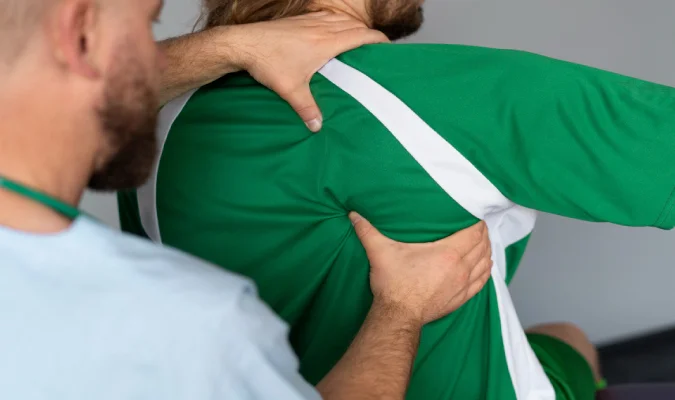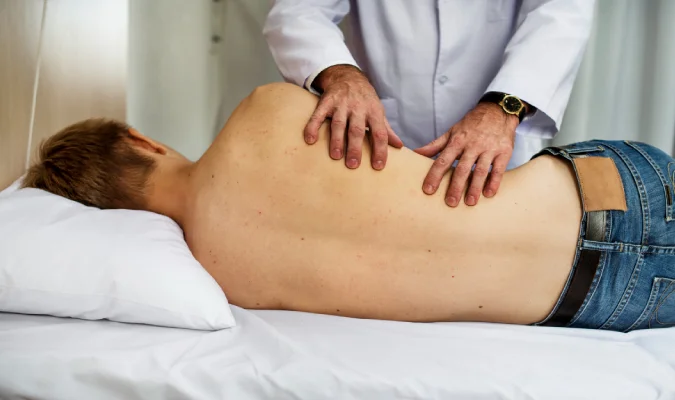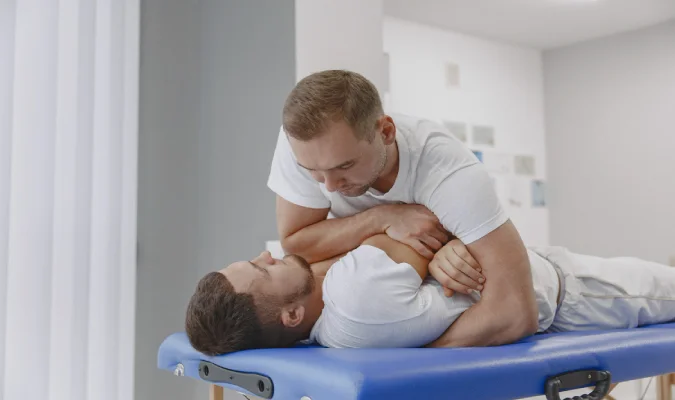


Chiropractic Care for Pain is an option many Portland residents consider when back discomfort, neck stiffness, or muscle and joint symptoms begin interfering with everyday life. Whether your pain developed gradually, followed physical activity, or appeared after a car accident, finding a healthcare provider who evaluates your individual needs is an important first step.
At Northwes – Hinojosa Chiropractic, patients can inquire about chiropractic evaluations for certain musculoskeletal complaints, including symptoms associated with automobile accidents. The clinic’s published team includes Dr. Hinojosa and Dr. Kostin, who have experience in accident-related chiropractic care.
If pain is making it difficult to work, sleep, drive, or enjoy your normal activities, you can contact the Portland office to discuss appointment availability.
Call 503-512-7076 to request information about a chiropractic evaluation.
Northwes – Hinojosa Chiropractic
205 NE 181st Ave
Portland, OR 97230
What Is Chiropractic Care for Pain?
Chiropractic Care for Pain generally refers to the evaluation and conservative management of selected musculoskeletal complaints, particularly those involving the spine and related movement limitations.
Chiropractors may use clinical assessment, patient education, exercise recommendations, and selected manual techniques. The appropriate approach depends on the symptoms, medical history, examination findings, and patient preferences.
Chiropractic care is not one standardized procedure. Not everyone needs a spinal adjustment, and not every cause of pain can be managed by a chiropractor.
Common Reasons Patients Seek Chiropractic Care
| Concern | What Patients May Experience | What an Evaluation Can Explore |
|---|---|---|
| Lower back pain | Stiffness, aching, difficulty bending | Symptoms, function, warning signs |
| Upper back discomfort | Pain between the shoulder blades | Movement and possible causes |
| Neck pain | Difficulty turning the head | Cervical symptoms and safety |
| Recurrent back pain | Episodes that return over time | History and functional patterns |
| Pain after a car accident | Neck or back discomfort after impact | Trauma-related concerns |
| Muscle and joint discomfort | Pain during ordinary activities | Relevant musculoskeletal findings |
| Persistent pain | Symptoms lasting for months | Broader management options |
A thorough evaluation helps determine whether chiropractic treatment may be appropriate or whether medical assessment, physical therapy, or another service is needed.
How to Find the Best Chiropractic Care for Pain in Portland
Searching for the best chiropractic care does not mean choosing the clinic that makes the biggest promises.
A better approach is to look for a provider who explains the evaluation process, discusses treatment alternatives, screens for risks, and establishes realistic goals.
What to Look for in a Chiropractic Clinic
| Quality | Why It Matters |
|---|---|
| Individualized evaluation | Different symptoms require different decisions |
| Clear explanations | Patients should understand findings and options |
| Safety screening | Some conditions make manual treatment inappropriate |
| Informed consent | Patients should know potential benefits and risks |
| Exercise and self-care guidance | Supports activity outside the clinic |
| Functional goals | Measures more than temporary changes in pain |
| Appropriate referrals | Recognizes when other healthcare is needed |
| Transparent scheduling | Helps patients plan their visits |
| Insurance communication | Clarifies administrative expectations |
When comparing clinics, ask whether the first appointment includes an assessment before treatment recommendations.
Northwes – Hinojosa Chiropractic welcomes inquiries from Portland residents who want to learn about its evaluation process and available appointments.
Can Chiropractic Care Help With Lower Back Pain?
Lower back pain is one of the most common reasons people consider conservative musculoskeletal care.
For selected adults with chronic primary low back pain, the World Health Organization conditionally recommends that spinal manipulative therapy may be offered as part of a broader treatment approach. The evidence supporting that recommendation is of very low certainty.
This means manipulation may be an option for some people, not that it is necessary or reliably effective for everyone.
Exercise, education, and other appropriate treatments can also play important roles.
Options That May Be Considered
| Approach | Potential Role | Important Consideration |
|---|---|---|
| Education | Understanding symptoms and self-care | Should reflect individual needs |
| Therapeutic exercise | Supporting movement and function | Requires suitable progression |
| Activity modification | Managing everyday demands | Avoid unnecessary inactivity |
| Joint mobilization | Addressing selected movement restrictions | Not appropriate for everyone |
| Spinal manipulation | Possible short-term symptom improvement | Benefits vary; risks require assessment |
| Physical therapy | Structured rehabilitation | May be suitable independently or alongside care |
| Medical referral | Investigating concerning symptoms | Sometimes the most important step |
The objective of Chiropractic Care for Pain should be to support meaningful improvements in daily function when treatment is clinically appropriate.
For more information about specific procedures, explore our guide to chiropractic adjustments.
Chiropractic Care for Neck Pain and Stiffness
Neck pain can affect driving, computer work, sleep, and ordinary movements such as turning to look over your shoulder.
Some neck discomfort is related to musculoskeletal conditions, while other symptoms require medical evaluation.
A chiropractor may assess certain neck complaints, but cervical manipulation is not automatically indicated.
Neck Symptoms to Discuss
- Pain when turning the head.
- Stiffness after prolonged sitting.
- Discomfort near the shoulders.
- Reduced comfortable range of motion.
- Headaches associated with neck symptoms.
- Pain that appeared after a collision.
- Tingling, numbness, or weakness.
Important Differences Between Neck Symptoms
| Symptom | Why It Matters | Next Step |
|---|---|---|
| Mild stiffness | May involve musculoskeletal structures | Clinical evaluation |
| Persistent pain | Requires assessment of contributing factors | Appropriate consultation |
| Pain after major trauma | Could indicate significant injury | Urgent medical assessment |
| Progressive arm weakness | Possible neurological involvement | Urgent evaluation |
| Severe sudden headache with neurological changes | Possible medical emergency | Emergency care |
| Dizziness with concerning symptoms | May need medical investigation | Prompt medical assessment |
The safest plan begins with determining what is causing the symptoms and whether any proposed manual technique is appropriate.
Chiropractic Care for Pain After a Car Accident
A car accident can create new concerns about neck pain, back stiffness, headaches, and limitations in daily activities.
Some symptoms appear immediately. Others may become noticeable hours or days after the collision.
However, not every symptom following an accident is a simple muscle strain. Serious injuries should be assessed medically before routine chiropractic procedures are considered.
Chiropractic Care for Pain after an automobile accident may be part of a broader approach for selected musculoskeletal complaints once urgent injuries and contraindications have been addressed.
Symptoms After a Collision
| Symptom | What to Consider |
|---|---|
| Neck stiffness | Possible cervical injury or other cause |
| Lower back pain | Musculoskeletal injury or another condition |
| Upper back discomfort | Movement-related symptoms or trauma |
| Headache | Possible head or neck involvement |
| Shoulder pain | Musculoskeletal or other injury |
| Tingling in arms or legs | Possible neurological involvement |
| Weakness or difficulty walking | Potential urgent medical concern |
Why the First Evaluation Matters
An accident-related evaluation should consider the circumstances of the collision, symptom timing, medical history, examination findings, and any emergency treatment already received.
A chiropractor should not assume that spinal manipulation is appropriate simply because a patient was in a crash.
If you are looking for more information about accident-related services, visit our page on car accident chiropractic care in Portland.
Have neck or back discomfort after a collision? Call 503-512-7076 to ask about an evaluation and what medical records to bring.
What About Whiplash and Accident-Related Neck Pain?
Whiplash is associated with a sudden acceleration and deceleration movement of the head and neck, often during an automobile collision.
Symptoms may include pain, stiffness, headaches, and shoulder discomfort. Some patients experience additional symptoms that need medical assessment.
An appropriate plan depends on the clinical findings.
Common Questions About Whiplash
| Question | General Consideration |
|---|---|
| Can symptoms appear later? | Yes, some symptoms are delayed |
| Does every patient need an adjustment? | No |
| Are exercises sometimes helpful? | Appropriate movement is commonly emphasized |
| Can serious injuries resemble whiplash? | Yes, evaluation is important |
| Should severe symptoms wait? | No, urgent symptoms require medical attention |
| Is recovery time predictable? | No, it varies by patient |
The NHS guide to whiplash explains common symptoms and when medical attention is needed.
You can also learn more about whiplash treatment in Portland.
What Happens During a Chiropractic Pain Evaluation?
Before recommending Chiropractic Care for Pain, the clinician should understand your symptoms and assess whether chiropractic treatment is appropriate.
The first appointment may involve several stages.
Step-by-Step Evaluation Process
- Discuss your main concern. Explain where the pain is located and when it began.
- Review your medical history. Mention previous injuries, health conditions, and medications.
- Describe recent accidents. Include any collision, fall, or other significant trauma.
- Review functional limitations. Explain what you cannot comfortably do.
- Complete an appropriate examination. The clinician may assess movement and relevant neurological findings.
- Screen for warning signs. Determine whether medical referral or additional assessment is needed.
- Discuss care options. Review exercise, education, manual treatment, or alternatives.
- Establish goals. Identify improvements that matter in daily life.
Questions Worth Asking
| Question | Why It Helps |
|---|---|
| What did the examination find? | Understand the assessment |
| What are my treatment options? | Compare available approaches |
| Do I need an adjustment? | Avoid assuming one is necessary |
| What risks should I understand? | Support informed consent |
| Can exercise be part of the plan? | Consider active care |
| How will we measure progress? | Focus on functional outcomes |
| When should I seek another opinion? | Clarify next steps |
A first visit does not guarantee that a particular treatment will be performed.
Are Chiropractic Adjustments the Only Treatment Option?
No.
Although adjustments are widely associated with chiropractic care, a patient-centered plan may include education, movement recommendations, therapeutic exercise, selected manual procedures, and referral when appropriate.
A proposed treatment should match the findings and the patient’s goals.
Comparing Conservative Options
| Option | Possible Purpose | Key Consideration |
|---|---|---|
| Spinal manipulation | May help selected spinal pain conditions | Not suitable for everyone |
| Mobilization | Addresses certain movement limitations | Requires clinical assessment |
| Exercise | Supports movement, strength, and function | Must be individualized |
| Education | Helps patients understand symptoms | Should include practical guidance |
| Activity pacing | Supports return to routine tasks | Avoid excessive restriction |
| Medical care | Evaluates other possible causes | Essential for concerning symptoms |
The WHO advises that spinal manipulation for chronic primary low back pain should be considered as part of a broader set of treatments rather than as an isolated intervention.
Learn more about therapeutic exercise and how movement may be incorporated into a care plan.
When Should You Seek Medical Care Instead?
Not all pain should be evaluated first in a chiropractic office.
Certain symptoms can indicate conditions that need urgent medical attention.
Warning Signs
| Warning Sign | Recommended Action |
|---|---|
| New loss of bladder or bowel control | Emergency medical care |
| Numbness around the groin or saddle area | Emergency medical care |
| Progressive weakness in the legs | Urgent medical evaluation |
| Severe pain after major trauma | Emergency assessment |
| Chest pain or breathing difficulty | Emergency medical care |
| Fever with severe back pain | Prompt medical evaluation |
| Sudden severe headache with neurological changes | Emergency medical care |
For additional guidance, see the NHS information about back pain.
If you have symptoms suggesting a medical emergency, do not wait for a chiropractic appointment.
What Makes a Personalized Pain Management Plan?
Effective Chiropractic Care for Pain begins with a plan that reflects the individual rather than a fixed package of adjustments.
The clinician should consider the nature of the symptoms, functional goals, medical findings, and response to care.
Goals That May Matter to Patients
- Sitting more comfortably at work.
- Returning to appropriate physical activity.
- Improving walking tolerance.
- Turning the neck safely while driving.
- Sleeping with fewer interruptions.
- Performing household tasks more comfortably.
- Understanding how to manage symptom flare-ups.
- Returning to daily routines after an accident.
Measuring Progress
| Goal | Possible Measure |
|---|---|
| Comfortable walking | Time or distance tolerated |
| Desk work | Duration of comfortable sitting |
| Sleep | Number of pain-related interruptions |
| Driving | Ability to move safely |
| Household activities | Tasks completed with less limitation |
| Exercise | Gradual return to suitable activities |
| Symptom management | Confidence with recommended self-care |
If symptoms are worsening or progress is limited, the plan should be reassessed. Continued appointments should have a clinical purpose.
Acute Pain Versus Chronic Pain
The length of time a patient has experienced pain can influence the evaluation and treatment discussion.
Acute pain is relatively recent. Chronic pain generally persists or recurs over a longer period, commonly beyond three months.
The distinction does not determine the cause by itself.
Differences Worth Understanding
| Factor | Acute Pain | Chronic Pain |
|---|---|---|
| Duration | Recent onset | Persistent or recurring |
| Evaluation | Consider new injuries and warning signs | Review broader contributing factors |
| Treatment | Depends on cause and severity | Often benefits from multiple strategies |
| Activity | Appropriate gradual movement | Functional progression |
| Goals | Safe return to routine | Sustainable improvement in function |
| Follow-up | Based on symptoms | Periodic reassessment |
For a more detailed discussion of long-lasting symptoms, read our article about chronic pain with chiropractic care.
How Long Does Chiropractic Care for Pain Take?
There is no universal number of visits that works for every patient.
The duration of Chiropractic Care for Pain depends on the clinical condition, symptom history, functional limitations, response to care, and whether other services are needed.
Some patients may need only an evaluation and advice. Others may benefit from follow-up appointments or coordinated care.
Factors That May Affect the Plan
| Factor | Why It Matters |
|---|---|
| Nature of symptoms | Different conditions need different approaches |
| Recent trauma | May require additional medical assessment |
| Medical history | Can influence treatment suitability |
| Functional limitations | Helps establish priorities |
| Response to care | Guides adjustments to the plan |
| Patient preferences | Supports shared decisions |
| Other healthcare needs | May require coordinated treatment |
Avoid choosing a provider based on promises of immediate recovery or a guaranteed number of visits.
Can Chiropractic Care Be Considered After an Auto Accident With Oregon PIP?
If your symptoms followed a motor vehicle collision, you may have questions about Oregon’s Personal Injury Protection insurance, commonly called PIP.
PIP may help pay certain eligible medical expenses related to an automobile accident, depending on the policy and applicable requirements.
That does not mean every chiropractic service, appointment, or procedure is automatically covered.
PIP Questions to Prepare
| Question | What to Verify |
|---|---|
| Do I have PIP benefits? | Applicable policy coverage |
| What is my claim number? | Accident claim details |
| Are chiropractic services eligible? | Policy conditions |
| Is prior authorization needed? | Administrative requirements |
| What medical records are required? | Supporting documentation |
| Will I owe any charges? | Financial responsibility |
| How is progress documented? | Clinical record process |
For more information, visit our guide to Oregon PIP insurance.
Call 503-512-7076 to ask what insurance and accident information to bring to your evaluation.
Can You Request a Same-Day Chiropractic Appointment?
Northwes – Hinojosa Chiropractic advertises same-day appointment options. Actual availability depends on the clinic’s schedule and should be confirmed directly.
If you are experiencing non-emergency back or neck discomfort, you can call to ask whether an evaluation is available today.
How to Request an Appointment
- Call 503-512-7076.
- Explain whether your main concern is back pain, neck pain, or accident-related discomfort.
- Mention any recent accident and medical assessment.
- Ask about current appointment availability.
- Inquire about Dr. Hinojosa or Dr. Kostin.
- Confirm the clinic address and arrival instructions.
- Ask which documents and insurance information to bring.
If a same-day appointment is unavailable, ask about the next opening. Serious symptoms require medical attention rather than waiting for a routine appointment.
Meet Dr. Hinojosa and Dr. Kostin
When selecting a provider for Chiropractic Care for Pain, learning about the clinical team can help you decide whom to contact.
Northwes – Hinojosa Chiropractic publishes profiles for Dr. Hinojosa and Dr. Kostin.
Dr. Hinojosa
The clinic describes Dr. Hinojosa as a chiropractor with extensive experience in accident-related injuries, including whiplash. His published profile also states that he speaks English and Spanish.
Dr. Kostin
The clinic describes Dr. Kostin as an experienced chiropractor with a focus on personal injury and automobile accident care.
You can review the published chiropractic team profiles and ask about the availability of either professional when scheduling.
Why Choose Northwes – Hinojosa Chiropractic in Portland?
Patients searching for Chiropractic Care for Pain often want a convenient local clinic, clear explanations, and an opportunity to discuss their symptoms with a professional.
Northwes – Hinojosa Chiropractic offers chiropractic services in Portland and provides information about care for musculoskeletal complaints, including concerns after automobile accidents.
Reasons to Contact the Clinic
- Ask about an evaluation for back or neck discomfort.
- Discuss symptoms that appeared after a car accident.
- Inquire about appointment availability.
- Ask about Dr. Hinojosa or Dr. Kostin.
- Learn what to expect during the first visit.
- Discuss conservative treatment alternatives.
- Ask what documents are needed for an accident-related consultation.
- Request information about the clinic’s PIP administrative process.
Northwes – Hinojosa Chiropractic
205 NE 181st Ave
Portland, OR 97230
Phone: 503-512-7076
Frequently Asked Questions About Chiropractic Care for Pain
What Is Chiropractic Care for Pain?
Chiropractic care for pain involves evaluating selected musculoskeletal complaints and considering conservative options such as education, exercise, and appropriate manual techniques. Treatment depends on the individual assessment.
Can Chiropractic Care Help With Lower Back Pain?
For selected patients, spinal manipulation may provide modest short-term improvements in pain or function. Benefits vary, and it should be considered alongside other appropriate care options.
Can a Chiropractor Evaluate Neck Pain?
A chiropractor may evaluate certain neck complaints, but serious injuries, neurological symptoms, and other warning signs require appropriate medical assessment.
Is Chiropractic Care Appropriate After a Car Accident?
It may be considered for selected musculoskeletal symptoms after appropriate assessment. Significant trauma or concerning symptoms require medical evaluation first.
Do All Patients Need Chiropractic Adjustments?
No. Adjustments are not necessary or appropriate for everyone. Exercise, education, other conservative options, or referral may be more suitable.
How Many Chiropractic Visits Will I Need?
The number of visits depends on your condition, functional goals, and response to care. No fixed treatment schedule is appropriate for every patient.
Does Oregon PIP Insurance Cover Chiropractic Care for Pain?
PIP may cover eligible accident-related medical expenses, subject to policy terms and applicable requirements. Coverage for specific services is not guaranteed.
Can I Ask for a Same-Day Chiropractic Appointment in Portland?
Yes. Northwes – Hinojosa Chiropractic advertises same-day appointment options. Call 503-512-7076 to confirm current availability.
Can I Request an Appointment With Dr. Hinojosa or Dr. Kostin?
Yes. You can call Northwes – Hinojosa Chiropractic at 503-512-7076 to inquire about appointments with either professional.
Where Is Northwes – Hinojosa Chiropractic Located?
The clinic is located at 205 NE 181st Ave, Portland, OR 97230. Call 503-512-7076 for appointment information.
Request Chiropractic Care for Pain in Portland
If back discomfort, neck stiffness, or symptoms after a car accident are affecting your daily life, an appropriate evaluation can help you understand your options.
At Northwes – Hinojosa Chiropractic, you can inquire about Chiropractic Care for Pain and ask about appointments with Dr. Hinojosa or Dr. Kostin.
Call 503-512-7076 to request information about your next appointment.
Northwes – Hinojosa Chiropractic
205 NE 181st Ave
Portland, OR 97230
This article is for educational purposes and does not replace individualized medical advice. Seek urgent medical attention for serious symptoms or injuries. Appointment availability, treatment outcomes, and insurance coverage are not guaranteed.