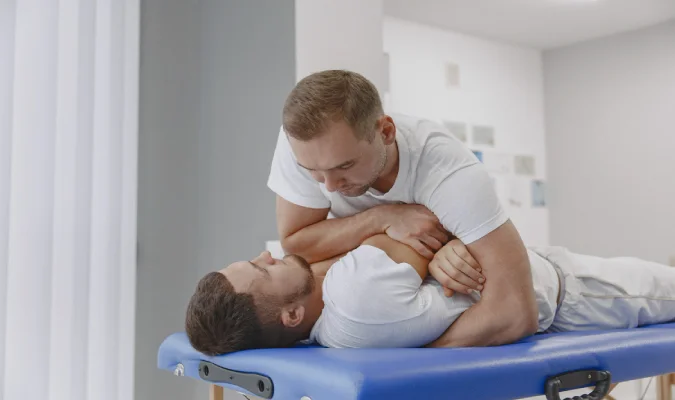


Chronic Pain with Chiropractic care is a topic many Portland residents explore when persistent back pain, neck stiffness, or recurring musculoskeletal discomfort begins to interfere with work, sleep, exercise, and everyday activities. Chiropractic treatment may be one option for selected conditions, but long-term pain management should begin with an appropriate evaluation rather than the assumption that every problem requires a spinal adjustment.
Chronic pain is complex. It can involve physical changes, nervous system sensitivity, sleep difficulties, stress, previous injuries, and other medical conditions. The most appropriate care depends on identifying potential causes, recognizing warning signs, and developing realistic goals.
At Northwes – Hinojosa Chiropractic, patients in Portland can inquire about evaluations for certain musculoskeletal concerns. The clinic’s published team includes Dr. Hinojosa and Dr. Kostin, both of whom have experience with accident-related chiropractic care.
Call 503-512-7076 to ask about an evaluation at 205 NE 181st Ave, Portland, OR 97230.
What Is Chronic Pain and Why Does It Persist?
Chronic pain generally refers to pain that persists or recurs for more than three months. It is not necessarily a sign of ongoing tissue damage, although medical conditions and injuries must be considered.
Persistent pain may affect a person’s ability to perform ordinary activities, even when imaging findings do not fully explain the intensity of the symptoms.
Common Features of Persistent Musculoskeletal Pain
| Feature | What Patients May Notice | Why It Matters |
|---|---|---|
| Persistent discomfort | Pain continuing for months | Requires individualized assessment |
| Fluctuating symptoms | Better and worse days | Progress may not be linear |
| Reduced mobility | Difficulty bending or turning | Functional goals become important |
| Sleep disruption | Difficulty finding comfortable positions | May affect daily well-being |
| Activity avoidance | Fear of aggravating pain | Can contribute to deconditioning |
| Previous injuries | Symptoms after trauma or repetitive strain | Medical history informs care |
| Stress and fatigue | Greater difficulty coping with symptoms | Supports a broader treatment approach |
The goal is to understand the person and their symptoms, not to assume that one spinal structure explains every complaint.
Can Chiropractic Care Help Manage Chronic Pain?
Managing Chronic Pain with Chiropractic care may be appropriate for some patients with selected musculoskeletal conditions, particularly certain forms of persistent low back pain.
Research suggests that spinal manipulation can produce modest improvements in pain or function for some people. However, benefits vary, the evidence has limitations, and chiropractic care is not a proven cure for chronic pain.
The World Health Organization conditionally recommends spinal manipulative therapy as one possible component of care for adults with chronic primary low back pain. The recommendation is based on very low-certainty evidence and does not support using manipulation as the only intervention.
What Chiropractic Care May and May Not Do
| Potential Role | What the Evidence Supports | What It Does Not Guarantee |
|---|---|---|
| Selected low back pain management | Modest improvement for some patients | Permanent pain elimination |
| Movement assessment | Identifying certain functional limitations | Explaining every cause of pain |
| Manual treatment | An option in selected cases | Suitability for every patient |
| Education | Supporting understanding and self-management | Prevention of all future flare-ups |
| Exercise guidance | Supporting mobility and activity | A fixed recovery timeline |
| Follow-up | Reviewing function and symptoms | Unlimited treatment necessity |
For more information about manual procedures, read our guide to chiropractic adjustments and what patients should know.
Chronic Back Pain Versus Chronic Neck Pain
Although persistent back and neck discomfort may share some characteristics, they are not identical conditions.
The evidence for spinal manipulation is better studied in low back pain than in many other chronic pain conditions. Treatment decisions for the neck require particular attention to individual risk factors.
Comparing Common Concerns
| Concern | Possible Symptoms | Important Consideration |
|---|---|---|
| Chronic low back pain | Aching, stiffness, activity limitations | May respond to multimodal conservative care |
| Persistent neck pain | Stiffness, discomfort when turning | Cervical techniques require risk assessment |
| Shoulder and upper back discomfort | Tension or restricted movement | Symptoms may have different origins |
| Pain after an accident | Persistent symptoms following trauma | Serious injuries must be excluded |
| Pain with tingling | Altered sensation in an arm or leg | Neurological evaluation may be needed |
| Widespread pain | Symptoms across multiple body regions | May require multidisciplinary care |
Chiropractic care should not be assumed appropriate for every cause of chronic pain, including inflammatory, neurological, infectious, or systemic conditions.
What Causes Chronic Back and Neck Pain?
Persistent pain may develop from multiple interacting factors rather than a single isolated cause.
A clinician should review the patient’s history, symptom pattern, previous injuries, activity limitations, and relevant medical conditions.
Factors Worth Discussing
- Previous accidents or injuries.
- Repetitive physical demands at work.
- Long periods of inactivity.
- Sleep difficulties.
- Changes in exercise or activity.
- Existing joint or spinal conditions.
- Stress and pain-related fear.
- Symptoms that suggest nerve involvement.
- Medical conditions that may affect bone or tissue health.
Not every contributing factor requires a chiropractic procedure. Some require medical assessment, rehabilitation, lifestyle adjustments, or other specialized care.
When Chronic Pain Needs Medical Attention First
Before attempting to manage Chronic Pain with Chiropractic treatment, patients should know when symptoms may indicate a more serious problem.
Persistent pain should not be dismissed simply because it has lasted a long time.
Warning Signs
| Symptom or Situation | Why It Matters | Recommended Action |
|---|---|---|
| New bladder or bowel dysfunction | Possible serious neurological problem | Emergency care |
| Numbness around the groin | Possible spinal emergency | Emergency care |
| Progressive arm or leg weakness | Possible neurological involvement | Urgent assessment |
| Fever with severe back pain | Possible infection | Prompt medical evaluation |
| Significant unexplained weight loss | Possible underlying illness | Medical evaluation |
| Severe pain after major trauma | Possible serious injury | Urgent assessment |
| History of cancer with new concerning back pain | Possible underlying condition | Prompt medical evaluation |
| Sudden severe headache with neurological symptoms | Possible emergency | Emergency care |
The NHS guide to back pain explains important symptoms that require medical attention.
A chiropractor should recognize when another healthcare professional is needed before considering manipulation.
What Happens During a Chronic Pain Evaluation?
An evaluation should address both the pain itself and the ways it affects daily life.
Patients should be able to discuss what they hope to accomplish, whether that means walking longer, sitting more comfortably, sleeping better, or returning to a valued activity.
Steps in a Responsible Evaluation
- Review the history. Discuss when symptoms began and how they have changed.
- Identify functional limitations. Explore the activities affected by pain.
- Review previous care. Consider medications, rehabilitation, imaging, and other treatments.
- Screen for warning signs. Determine whether medical referral is needed.
- Perform an appropriate examination. Assess relevant movement and neurological findings.
- Discuss options. Explain potential benefits, risks, and alternatives.
- Set measurable goals. Identify realistic changes to monitor.
- Plan reassessment. Decide how progress will be reviewed.
Questions Patients Should Ask
| Question | Why It Is Useful |
|---|---|
| What may be contributing to my symptoms? | Understand the assessment |
| Are there warning signs? | Clarify safety |
| Is spinal manipulation appropriate for me? | Evaluate suitability |
| What other options exist? | Support informed choice |
| What can I do between visits? | Encourage self-management |
| How will progress be measured? | Avoid unnecessary treatment |
| When should we change the plan? | Support timely reevaluation |
To prepare for your visit, explore our article on chiropractic appointments in Portland.
Call 503-512-7076 to inquire about an evaluation for persistent musculoskeletal discomfort.
How Chiropractic Adjustments Work
A chiropractic adjustment, also called spinal manipulation, involves a controlled manual technique applied to a joint.
Some procedures use a quick, small movement, while other approaches use slower mobilization techniques. The appropriate choice depends on the condition, examination findings, risks, and patient preferences.
An audible popping sound is not proof that a joint was damaged or repaired, and it is not a measure of treatment success.
Adjustments Versus Other Approaches
| Approach | Potential Purpose | Important Limitation |
|---|---|---|
| Spinal manipulation | Selected musculoskeletal pain management | May not be appropriate for all patients |
| Joint mobilization | Address selected movement limitations | Requires clinical judgment |
| Therapeutic exercise | Improve function and tolerance | Needs appropriate progression |
| Education | Build self-management skills | Should be individualized |
| Physical therapy | Structured rehabilitation | May be a better fit for some conditions |
| Medical management | Evaluate or treat other causes | May be necessary alongside conservative care |
Are Chiropractic Adjustments Safe for Chronic Pain?
Spinal manipulation can cause temporary soreness, stiffness, headache, or increased discomfort.
Serious complications are uncommon, but certain medical conditions and recent injuries may increase risk. Cervical manipulation requires particular caution, including consideration of vascular and neurological warning signs.
Conditions That May Change Treatment Decisions
- Recent significant trauma.
- Suspected fracture or spinal instability.
- Severe osteoporosis or fragility fracture risk.
- Progressive neurological deficits.
- Certain inflammatory or infectious conditions.
- Suspected vascular injury.
- Other contraindications identified during assessment.
A clinician should discuss material risks and alternatives before treatment. Patients can decline a procedure or ask about a different approach.
Why Exercise Matters in Long-Term Pain Management
One of the most important considerations when managing Chronic Pain with Chiropractic care is whether the plan supports independence and physical function.
For chronic primary low back pain, international guidance supports structured exercise as a possible component of care. There is no single exercise style proven best for everyone.
The most appropriate program should reflect the patient’s health, preferences, activity tolerance, and goals.
Examples of Functional Exercise Goals
| Goal | Possible Approach | How Progress May Be Tracked |
|---|---|---|
| Walk comfortably | Gradual walking progression | Time or distance |
| Improve mobility | Individualized movement exercises | Comfortable range |
| Return to work | Activity-specific progression | Task tolerance |
| Build strength | Appropriate resistance exercise | Functional capacity |
| Reduce activity avoidance | Gradual exposure to movement | Confidence and participation |
| Improve daily routines | Pacing and movement breaks | Activities completed |
Explore our information about therapeutic exercise as part of musculoskeletal care.
The World Health Organization’s chronic low back pain guideline describes the role of education, exercise, selected physical therapies, and other approaches within comprehensive care.
Why Pain Management Should Be More Than Adjustments
Persistent pain can affect sleep, mood, work, physical activity, and relationships.
A treatment plan that relies exclusively on repeated passive procedures may overlook factors that influence long-term function.
Components of a Broader Plan
| Component | Potential Contribution |
|---|---|
| Clinical education | Understanding symptoms and options |
| Therapeutic exercise | Improving physical capacity |
| Activity pacing | Balancing activity and recovery |
| Sleep support | Addressing factors affecting well-being |
| Psychological support | Managing pain-related stress and avoidance |
| Medical evaluation | Investigating other conditions |
| Selected manual treatment | Possible symptom management |
| Periodic reassessment | Reviewing progress and ongoing need |
The aim is to help patients participate in meaningful activities rather than promise complete elimination of every symptom.
Managing Flare-Ups Without Losing Progress
Chronic pain may fluctuate even when overall function improves.
A flare-up does not always mean that a new injury has occurred, but severe or unfamiliar symptoms should not be ignored.
Practical Flare-Up Strategies
- Review whether symptoms are familiar or significantly different.
- Watch for neurological or other medical warning signs.
- Modify activity temporarily rather than assuming complete bed rest is necessary.
- Continue comfortable movement when medically appropriate.
- Follow previously agreed self-management recommendations.
- Contact a healthcare professional if symptoms worsen or do not settle.
- Reassess the care plan when flare-ups become frequent or disruptive.
When to Reevaluate
| Situation | Suggested Response |
|---|---|
| Familiar mild flare-up | Follow individualized guidance |
| New weakness or sensory loss | Seek prompt medical assessment |
| Increasing activity limitations | Arrange reevaluation |
| No functional improvement | Review treatment goals |
| Persistent need for repeated passive care | Discuss alternatives and self-management |
| New pain after a collision | Consider accident-related medical evaluation |
Chronic Pain After a Car Accident
Some people continue to experience neck or back discomfort long after an automobile collision.
Persistent symptoms should not automatically be attributed to whiplash or a spinal misalignment. An evaluation should consider the original injury, subsequent symptoms, previous care, and other possible causes.
Important Questions After a Collision
- Were serious injuries evaluated at the time of the accident?
- Did the symptoms begin immediately or later?
- Have they changed over time?
- Are there headaches, dizziness, tingling, or weakness?
- What treatments have already been tried?
- Which activities remain difficult?
- Is additional medical evaluation appropriate?
For patients whose symptoms followed a crash, read more about chiropractic evaluations after car accidents.
If insurance is involved, clinical care and billing eligibility should be evaluated separately. Coverage depends on the relevant policy and circumstances.
How Long Should Chiropractic Care Continue?
There is no universal number of adjustments or appointments that every person with chronic pain needs.
When considering Chronic Pain with Chiropractic care, the treatment plan should be reviewed according to symptoms, function, patient preferences, and clinical findings.
A reasonable plan includes clear goals and opportunities to change direction if progress is limited.
Measuring Progress Beyond Pain Scores
| Measure | Example of Meaningful Change |
|---|---|
| Walking | Increased comfortable walking time |
| Sleep | Fewer nights disrupted by discomfort |
| Work | Better tolerance of required tasks |
| Daily activity | Greater participation in household activities |
| Movement | Improved comfortable mobility |
| Self-management | More confidence managing flare-ups |
| Overall function | Progress toward patient-selected goals |
If a patient is not improving, the clinician should reconsider the diagnosis, treatment approach, and need for referral rather than simply continuing the same intervention indefinitely.
Meet Dr. Hinojosa and Dr. Kostin in Portland
Northwes – Hinojosa Chiropractic publishes professional profiles for Dr. Hinojosa and Dr. Kostin, both associated with the clinic’s chiropractic team.
Dr. Hinojosa
The clinic’s published profile describes Dr. Hinojosa’s experience with chiropractic care involving automobile accident injuries. It also identifies English and Spanish among his spoken languages.
Dr. Kostin
The clinic presents Dr. Kostin as a chiropractor with experience in personal injury and automobile accident cases.
You can review the professional profiles of the Portland chiropractic team.
Their experience with accident-related care should not be interpreted as a guarantee that a particular chronic pain condition will respond to chiropractic treatment.
Why Consider Northwes – Hinojosa Chiropractic in Portland?
If you are exploring Chronic Pain with Chiropractic care, a useful first step is asking whether your condition is appropriate for a chiropractic evaluation and what alternatives may be considered.
At Northwes – Hinojosa Chiropractic, patients can ask about evaluations for musculoskeletal complaints and appointment availability with the clinic’s team, including Dr. Hinojosa and Dr. Kostin.
Questions to Ask Before Scheduling
- Do you evaluate my type of persistent pain?
- What happens during the first visit?
- Will I receive a clinical evaluation before any adjustment?
- Can we discuss exercise and non-manual options?
- How are treatment risks explained?
- What happens if chiropractic care is not appropriate?
- How are follow-up visits determined?
- What insurance and payment information should I bring?
Northwes – Hinojosa Chiropractic
205 NE 181st Ave
Portland, OR 97230
Call 503-512-7076 to ask about an evaluation.
Frequently Asked Questions About Chronic Pain and Chiropractic Care
What Is Considered Chronic Pain?
Chronic pain generally refers to pain that persists or recurs for more than three months. An evaluation can help identify possible contributing conditions.
Can Chiropractic Care Help With Chronic Back Pain?
Spinal manipulation may provide modest improvements in pain or function for selected patients with chronic low back pain. Results vary, and it is best considered within a broader care plan.
Can Chiropractic Adjustments Cure Chronic Pain?
No treatment can guarantee a cure for chronic pain. Chiropractic adjustments may help some patients manage selected symptoms, but they are not appropriate for everyone.
Is Spinal Manipulation Recommended for Chronic Low Back Pain?
The World Health Organization conditionally recommends spinal manipulative therapy as one possible component of care for chronic primary low back pain, based on very low-certainty evidence.
Do I Need an Adjustment at Every Appointment?
Not necessarily. Treatment decisions should reflect the clinical evaluation, patient preferences, safety considerations, and progress toward functional goals.
Is Exercise Important When Managing Chronic Pain?
Yes. Structured exercise may help improve function and activity tolerance for selected patients. Programs should be individualized.
Is Chiropractic Care Safe for Everyone With Chronic Pain?
No. Certain conditions, including suspected fractures, instability, serious neurological problems, or recent significant trauma, may make manipulation inappropriate.
How Many Chiropractic Visits Will I Need?
There is no universal number of visits. The plan should depend on your condition, goals, response to care, and periodic reassessment.
Can Chronic Pain Continue After a Car Accident?
Yes. Some people experience persistent symptoms after a collision. Ongoing pain warrants appropriate evaluation rather than an assumption about its cause.
Can I Request an Appointment With Dr. Hinojosa or Dr. Kostin?
Yes. Contact Northwes – Hinojosa Chiropractic at 503-512-7076 to ask about appointment availability with the clinic’s team.
Request an Evaluation for Persistent Pain in Portland
Managing Chronic Pain with Chiropractic care begins with understanding the symptoms, considering available evidence, and selecting appropriate treatment options.
If persistent back or neck discomfort affects your activities, contact Northwes – Hinojosa Chiropractic to ask about an evaluation and availability with Dr. Hinojosa or Dr. Kostin.
Northwes – Hinojosa Chiropractic
205 NE 181st Ave
Portland, OR 97230
Call 503-512-7076 to inquire about an appointment.
This article is educational and does not replace individualized medical advice. Chiropractic treatment is not suitable for every condition. Seek urgent medical attention for serious neurological symptoms, severe trauma, or other emergency warning signs. Treatment results and insurance coverage cannot be guaranteed.